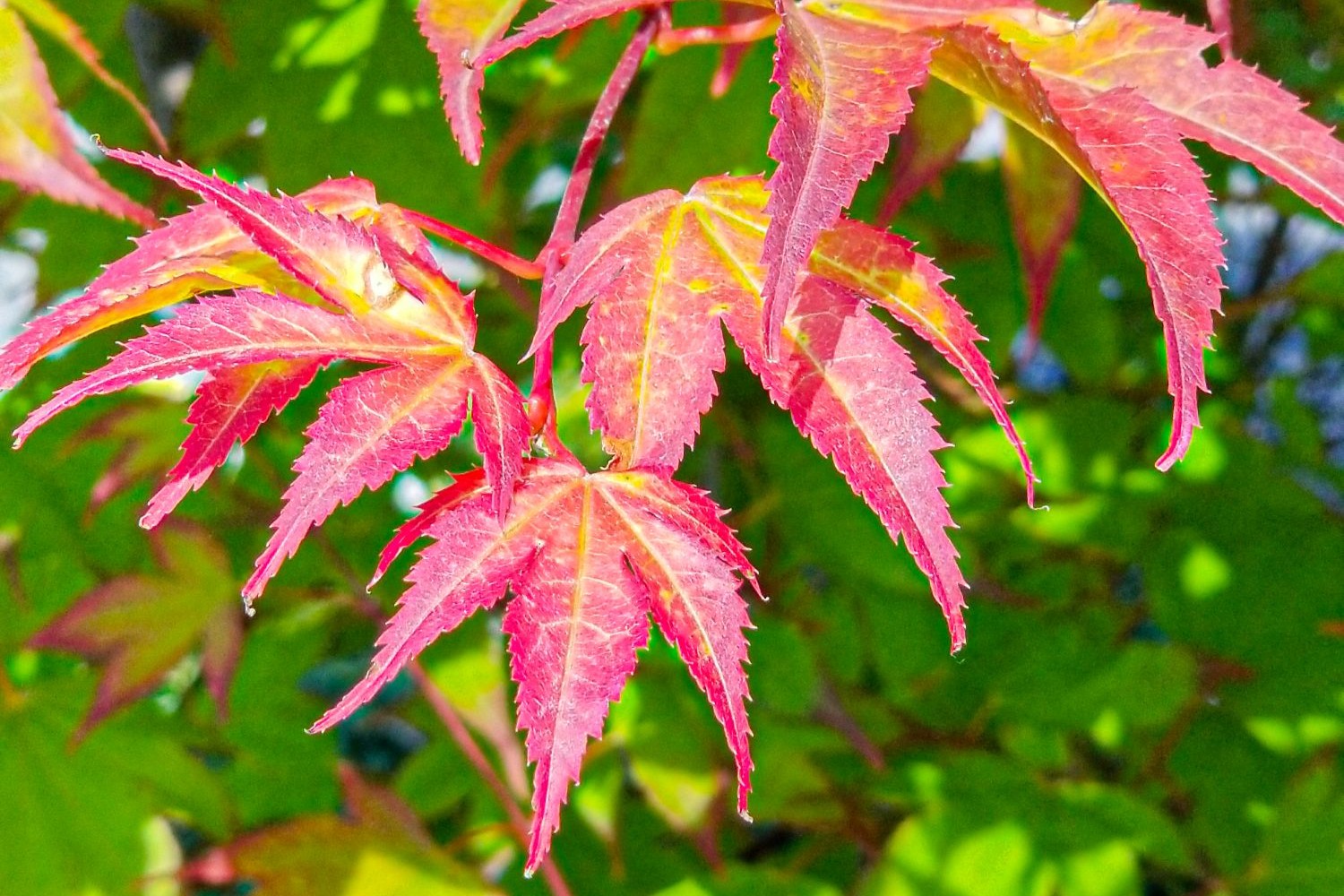
Japanese Maple trees are wonderful specimen trees in the garden. With over 1,000 varieties to choose from, growing in a range of sizes from as small as 2 feet to 30 feet, there is a Japanese maple to suit every space. Cascading, mounding, round, upright and vase-like Japanese Maples in a variety of foliage colors from shades of green to vivid red and deep purple offer dramatic sculptural quality, pleasant shade or a vibrant focal point to enjoy.
Like other trees, Japanese maples can be planted at any time of year, as long as the ground is not frozen. The following is our guide to planting and caring for your Japanese Maple trees.
While you can plant Japanese maples at any time of year, the best time to plant a Japanese Maple tree is in the fall. The cool weather of fall will allow trees plenty of time to establish roots in mild weather before next summer arrives, reducing your work load as your plant establishes itself in the landscape.
With Japanese Maples available in such a wide variety of sizes, there is truly one for every size garden. You will want to select a space that is an appropriate size for your tree for planting (or if you have a set space, talk to us about which varieties will be best for that area!). Dwarf varieties grow well in large containers, and can be used on porches, decks and balconies with proper light conditions.
For detailed planting instructions, check out our resource on planting trees and shrubs.
Most Japanese Maples can take full sun, but shade in the afternoon is ideal. The afternoon sun can cause the leaves to burn in some cases. If you are working with a full shade area, ask us about cultivars that will work well for your space, as there are a number of options that can grow in lower light conditions.
Your Japanese maple requires soil that is moist and well-draining. They are tolerant of our clay soil, but will do best if the soil is amended to allow for increased drainage.
If you are planting your tree in a container, we recommend mixing Merrifield Potting Mix and Merrifield Planting mix 50/50 in your vessel. BioTone Starter Plus Starter Plant Food is a good fertilizer to use when planting. After planting, fertilize once in spring and again once in fall with either Merrifield Tree and Shrub Food or Happy Frog’s Japanese Maple fertilizer.
Consistent watering is necessary for newly planted Japanese Maples. You will want to check the moisture level every 1 to 3 days after planting. Make sure you are using your watering wand or hose to fully saturate the soil and root system. Throughout the first growing season, gradually reduce your watering frequency to once a week or so. Once your Japanese maple is established, it will not need supplemental watering, except during periods of dry weather.
Adding mulch around the base of your Japanese Maple will help conserve moisture and protect the roots of your tree throughout the cold of winter. We recommend applying a 1 to 3 inch layer of mulch around the tree’s base. Start the mulch a few inches away from the trunk of the tree, reapplying once every year or two. You can choose the type of mulch you like best.
Light pruning can be done in late winter while your tree is dormant. Simply remove the dead or damaged branches in the interior of the tree, as well as any branches that are rubbing against each other. Doing this small maintenance will help with air circulation and more light penetration in the canopy of your Japanese Maple.