hardscape
Walkways
When planning your walkway, the first item to consider is the material. Walkways can be constructed out of concrete, natural stone or decorative stones and there are pros and cons to each option. To see the pros and cons of each material, visit our Patios page. Depending on the material selected, you’ll have the option to install it wet laid or dry laid.
A wet laid walkway involves mortaring natural stone or brick onto a subbase in your yard. The subbase is constructed of gravel, topped with a layer of concrete that your finishing stone is then mortared to. This method is typically considered the higher end approach as it does not require regular maintenance like weeding or replenishing sand or gravel between the joints. It is also typically more expensive.
A dry laid walkway involves laying pavers, brick or natural stone like flagstone over a subbase and placing bluestone gravel or sand between the joints. This is typically less expensive than wet laid options as it does not require mortar installation thus saving cost on labor.
A major benefit of dry laying your walkway is that it is more flexible during freezing, thawing and settling. Because the dry laid walkway has flexible joints, the ground can easily freeze/thaw, preventing your surface stone or paver from cracking during the colder months. If needed, the surface stones can also be picked up, releveled and reset, while wet laid walkways always remain in place due to the mortar.
Dry laid walkways typically require more maintenance as weeds can emerge between the joints. You’ll also need to replenish the sand or bluestone gravel in between the joints of the pavers every couple of years.
Driveways
When it comes to designing and installing driveways, the most common method is a dry laid paver, gravel or decorative stone surface. We also design and install mortared brick driveways. Our team of landscape specialists will work with you to select a material that meets the weight requirements, budget and your design style.
Steps
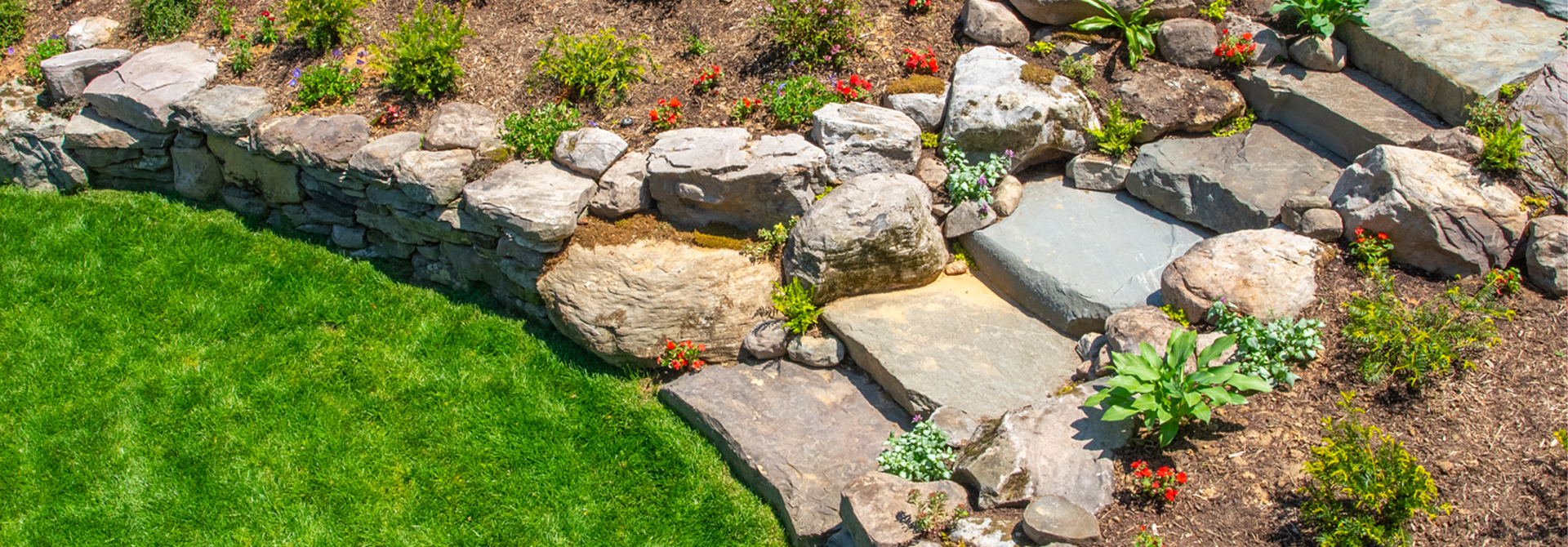
Steps are important throughout the landscape to allow us to move easily through different elevations of the garden. They can be achieved with many types of materials, such as stepping stones, boulders, pavers, flagstone, landscape timbers and more. They can be installed wet laid or dry laid, depending on the material and location.

At your scheduled appointment, one of our skilled landscape designers will meet with you to understand your project goals, design preferences and vision. The designer will collect measurements and photos of the space and take stock of all related aspects, including available space and any structural, drainage or planting considerations.
After gaining a thorough understanding of your vision, your designer will dream up a direction to accomplish your goals. After consulting with the construction manager, your designer will share a recommended approach and proposal for the project. A formal landscape design drawing can be provided for an additional fee.
Once the proposal is approved and a deposit is in place, we will schedule the job. Your designer will work hand in hand with our construction manager to source the appropriate materials to bring the outdoor patio to life. Your designer will remain with you throughout this process, and your team will come to work every day from the moment we break ground until the project is complete (barring any extreme weather scenarios).