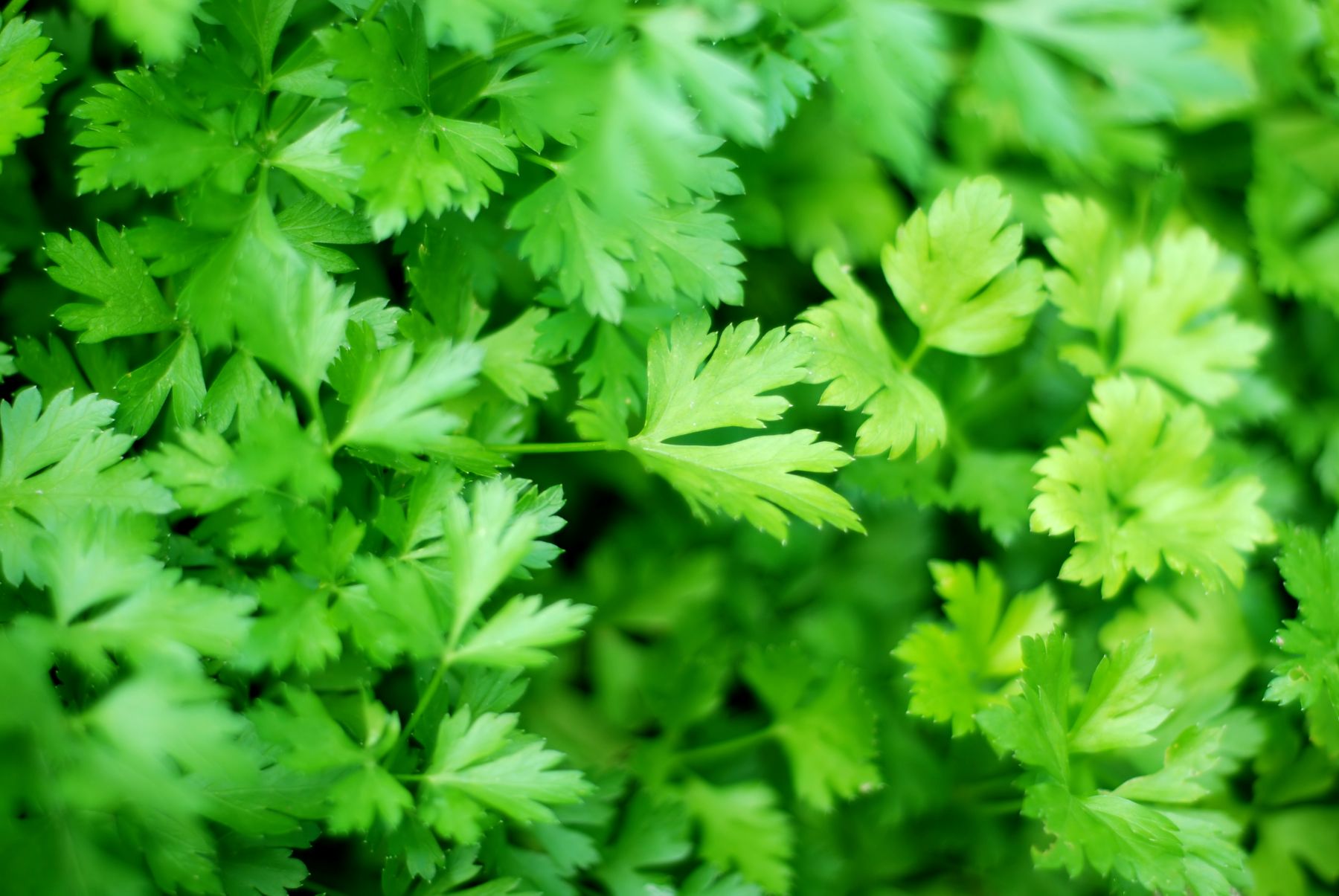
Cool season herbs like chives, cilantro and parsley are not only useful for cooking and easy to grow, they also offer pest management and visual texture in the garden. Add them to containers on your patio, in herb garden beds, or even indoors for easy access when you are cooking with these herbs. Read our guide to growing and caring for these delicious additions to your herb collection.
Chives, cilantro and parsley can all be planted as seeds or as transplants. If you’d like to start the seeds indoors, we suggest planting these in seed trays about 6 to 8 weeks before the last spring frost date, or 8 to 10 weeks before your first fall frost date. Transplants will save you time, and can be planted later in the season.
To start your seeds, soak them overnight before planting. Use a seed starting mix when filling up the seed tray cells and pre-moisten the planting mix with water before adding your soaked seeds. Add a few of these seeds to each cell and cover them with around ¼” of the soil. Check your seed trays consistently and water as needed. You may find a spray bottle useful for keeping the soil moist. When your cilantro and parsley reach 2” in height, thin out the weakest seedlings and give each cell one plant only. Chive seeds do not require thinning and can grow with multiple seeds per cell.
Before planting outside, acclimate your seeds to outdoor conditions by hardening them off over a 1 to 2 week period, bringing them outdoors to a sheltered area during the day, then bringing them indoors at night. After this time you can transfer them to your containers or garden bed outdoors.
When transplanting your seedlings or planting transplants in containers, look for a container about 12 inches deep so the herbs’ taproots have enough room to grow. When planting directly into the garden, you might like to set up an herb garden plot, or you may prefer to mix your herbs into garden borders an other beds.
These herbs can be grown indoors, but you will need a window with full, unobstructed sun.
Check your herbs daily to see if they need water. If the top inch of soil feels dry, it’s time to water your plant. Cilantro, parsley and chives generally need about an inch of water per week, and more if you have planted them in smaller pots.
Parsley, cilantro and chives thrive in full sun to part shade, ideally receiving at least 6 hours in sunlight each day. Their ideal temperatures range from 50 to 75 degrees Fahrenheit, but they are frost tolerant. If you are growing them in warmer temperatures, you will want to provide some shade from the afternoon sun.
While these herbs are not heavy feeders, they may benefit from a couple of applications of liquid organic fertilizer, once or twice throughout the growing season.
When your plants are around 6” tall, it’s time to harvest. You can take the leaves as you need them by pinching back parts of the herb’s upper stems. This will encourage new plant growth and fuller looking plants. Do not take more than a 1/3rd of the leaves at a time.
Parsley, cilantro and chives are generally resistant to pests and other problems. In fact, if you plant these near vegetables and fruits such as apples, beans, peas, peppers, pears, roses and tomatoes, the herbs will help deter harmful bugs like aphids, beetles, cutworms and sawflies.
If you see bright green caterpillars with yellow and black stripes on your parsley, leave them be! They are the caterpillars of the beneficial and beautiful Black Swallowtail butterfly. Just be sure to plant enough parsley to share with these critters.