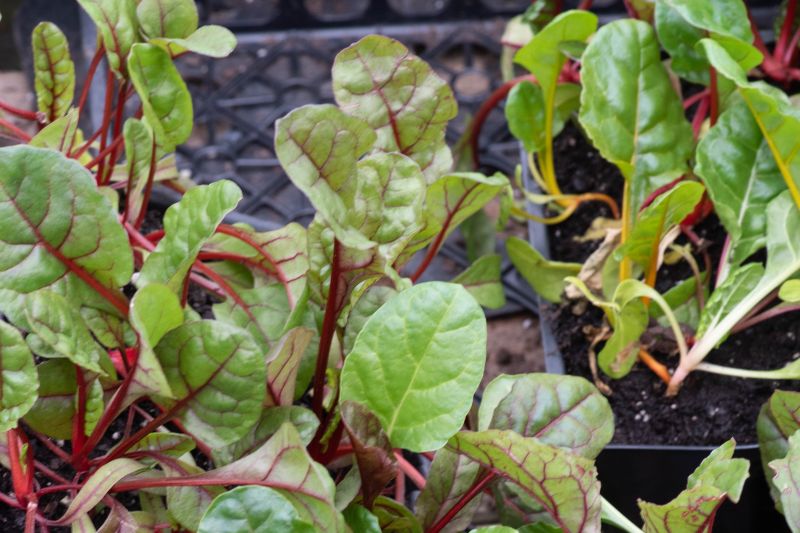
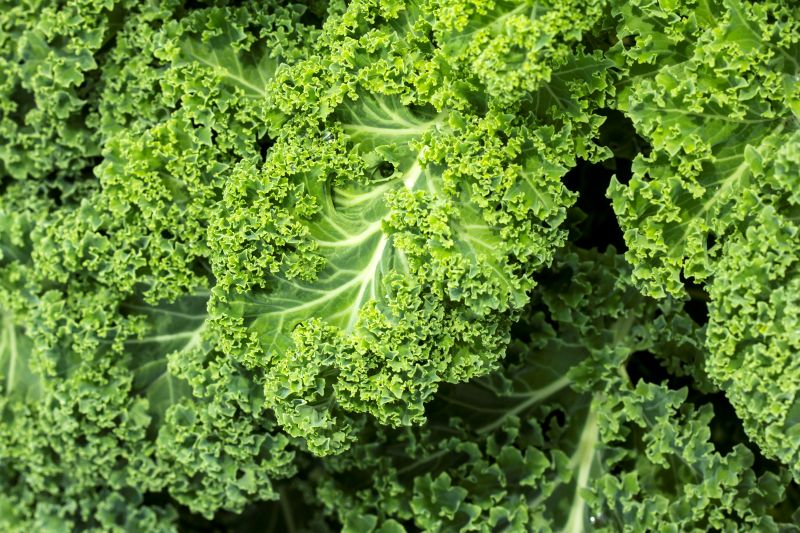
Kale and Swiss chard are delicious and healthy additions to your garden and some of the easiest greens to grow. Add them to garden beds or containers and watch the leaves grow abundantly throughout the cool season. Both kale and chard can endure even through some cold temperatures, with kale in particular sometimes able to grow throughout the winter. They make healthy additions to salads, soups, smoothies and more. Follow along to learn more about how to plant and care for these nutritious vegetables.
Kale and Swiss chard can be started from seed indoors or outdoors or purchased as transplants in both spring and fall. For a spring harvest, start your seeds indoors around 4 to 6 weeks before your last frost date and proceed to transplant the seedlings into your garden when they’re around 4 inches tall and the soil is warm enough to be worked, typically around 2 to 4 weeks before your last frost. For a fall harvest, we recommend directly sowing your seeds into pots or straight into a garden bed around 10 to 12 weeks before your anticipated first frost. You can also start your seeds indoors in mid-summer to be transplanted into the garden in late summer.
If you’d like to start your seeds indoors, you will want to use a seed tray and seed starting mix. Carefully add two to three kale or Swiss chard seeds per cell in the seed tray, about ¼” deep. Place your tray in a sunny location in your home, where the temperature remains at least 70 degrees Fahrenheit. Water your seeds regularly. You can use a spray bottle to mist them, if you choose. Expect your seedlings to emerge in 10 to 21 days.
If you are planting your seeds or transplants in containers, start with a vessel at least 12” in diameter with drainage holes. Fill your pot with Coast of Maine Raised Bed Mix or an alternative and either directly sow your seeds or fill the pot with transplants. You can fit around 4 to 6 Kale or Swiss chard plants per 12” container. Kale and Swiss Chard would also do well in pots with other plants, such as dill and nasturtiums, that will help deter pests. Calendula and marigolds would also be ideal as companion plants as they will draw in beneficial insects like ladybugs and green lacewings.
Kale and Swiss Chard plants require full sun to partial shade. Exposure to too much heat can lead to wilting and loss of flavor, so you may want to place your plants in an area that gets some shade in the afternoon when the sun is hottest. The ideal soil temperature for kale and chard is between 60 to 65 degrees Fahrenheit. These vegetables will handle some frost once they are mature, with frost encouraging sweetness and crispness of the leaves.
When your kale and Swiss chard seeds are still maturing, we recommend checking your plants daily and watering if the soil is dry. When your plants are mature, they will need approximately 1” to 1½” of water per week. They like to be consistently moist, but not soggy.
Fertilize your kale and Swiss chard seedlings with a high-nitrogen plant food that will encourage leafy growth and root strength. Add this fertilizer to your containers or beds before planting your seedlings. This one application will be enough to help the plants gather strength and promote leafy growth.
Kale and Swiss chard are susceptible to pests aphids, cabbage loopers, cabbageworm, cutworms, flea beetles, and slugs. Keep an eye on your plants, and if you see holes in the leaves or larvae, treat the problem with horticultural oil, other organic pesticides and a hard spray of water to remove these critters. You can always bring a sample or photos in to the plant clinic for recommendations.
You can harvest your kale and Swiss chard whenever they have plenty of developed leaves. Harvest the leaves from the outside in. This will be around 50 to 75 days after planting. To harvest, cut your leaves towards the base of the plant. Harvesting frequently will encourage more leafing in the future, giving you an abundant bounty of greens well into the cooler temperatures.