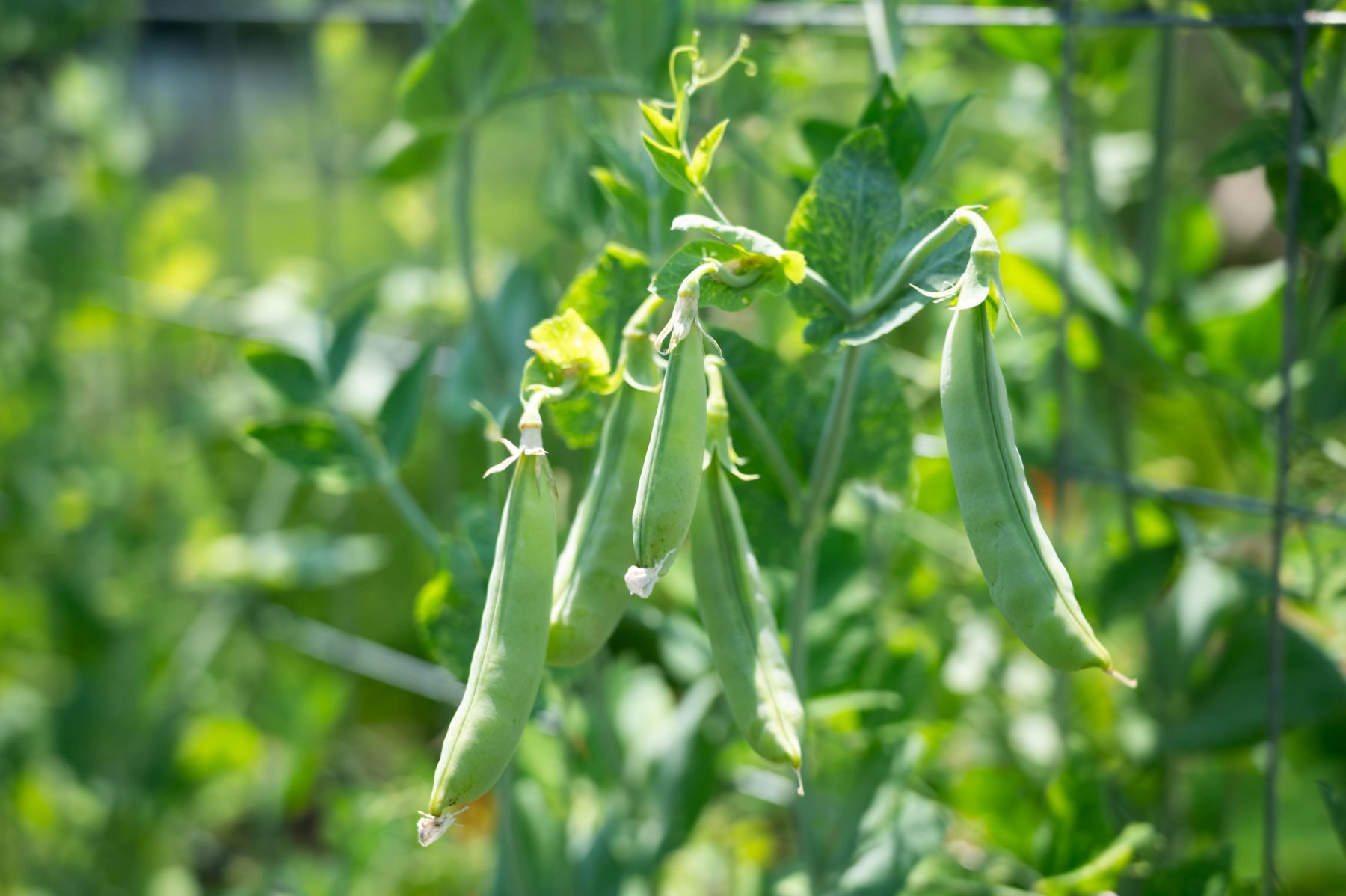
Delicious, sweet and easy to grow, peas are a fun addition to any cool season garden. Varieties that can be eaten with and without the pod are both available to grow in the spring and fall. While most grow as vines and need the support of trellises, there are some dwarf and shrubby forms available that can be easily grown in smaller spaces. Read on for our guide to growing these delicious cool season vegetables.
Peas are best started as seeds. Unlike many other vegetables, they do not do well as transplants, so you will want to start your seeds after soaking them in water overnight before planting them in their final location, with just a few inches between seedlings. Plant according to the instructions on the packet of seeds you have chosen.
Be sure to place a trellis, chicken wire, or some other structure that will allow them to climb, unless you have purchased a cultivar that does not require support.
In fall, you will want to plant your seeds in August to ensure you can harvest your plants before the frost arrives. In the spring, you will want to plant in March, early April at the latest, to allow for harvest before the summer arrives.
Peas need plenty of moisture, so you will want to check the soil daily to determine whether your plants need additional water. If the top 1-2 inches or so of soil is dry, it’s time to water again. Mulching around the base of your plant, once it has sprouted and established itself, may help to conserve moisture. Do not mulch over peas until they have germinated and begun to grow.
Pea plants take 6-8 weeks to mature after germination. To harvest, cut tender pods off the vine, then freeze them if you will not be using them within a couple of days, to prevent the peas from becoming starchy.
Powdery mildew and root rot are both common issues with peas. Root rot occurs when peas are kept in wet soil conditions for too long. You can prevent this by checking the soil before watering to ensure it’s had time to dry out.
Powdery mildew occurs in warmer conditions, first on the older leaves of the plant. You will need to keep an eye out for powdery mildew particularly on spring planted peas. It appears as a white powder and spreads up the plant until it affects the pea pods themselves.
The most effective prevention of powdery mildew is to plant your peas on time in the spring, in early March. Late planted peas growing into the late spring or early summer are most susceptible to powdery mildew, as the conditions are perfect at that time for it to form. The cool temperatures of early spring prevent the mildew from developing.