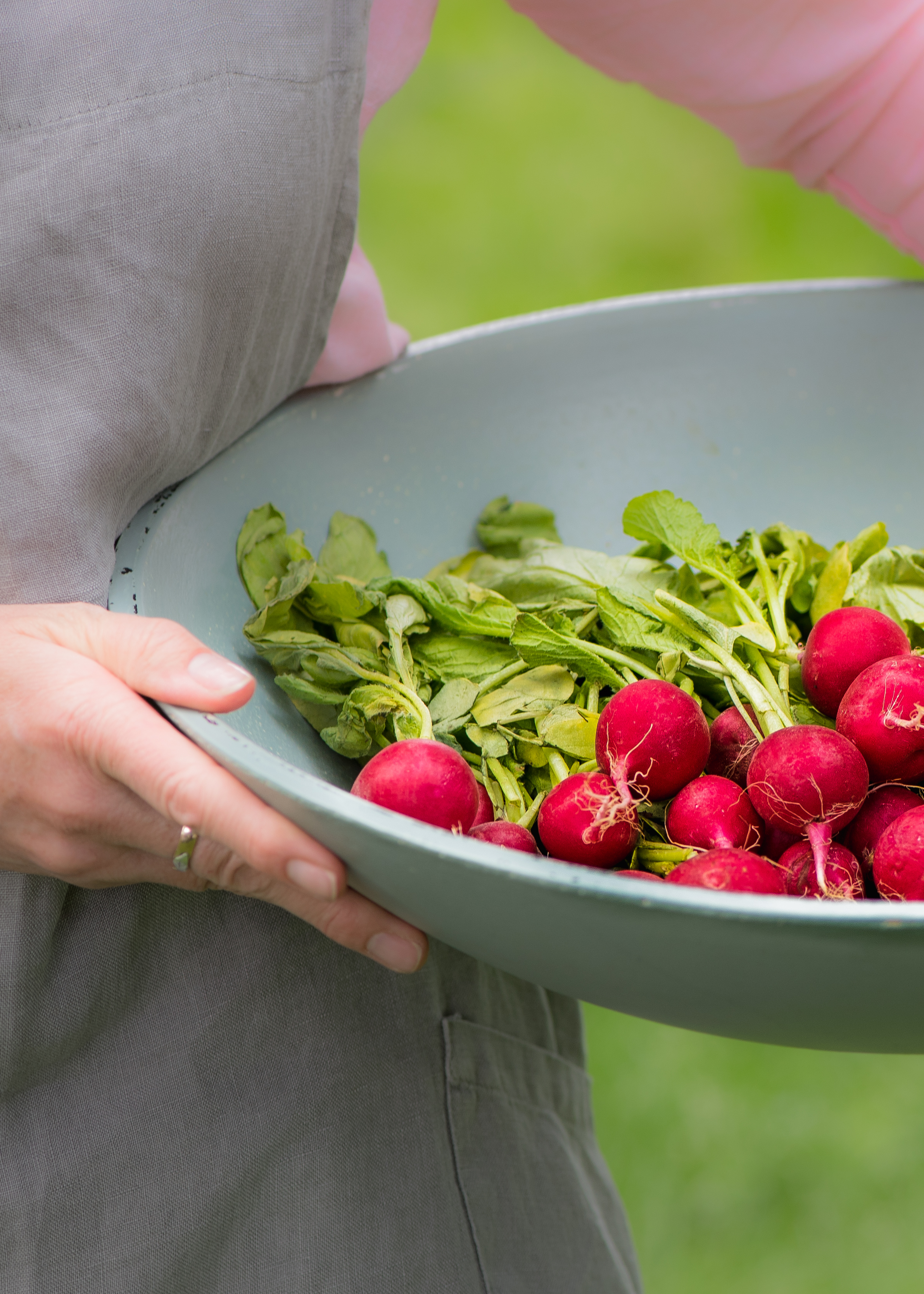
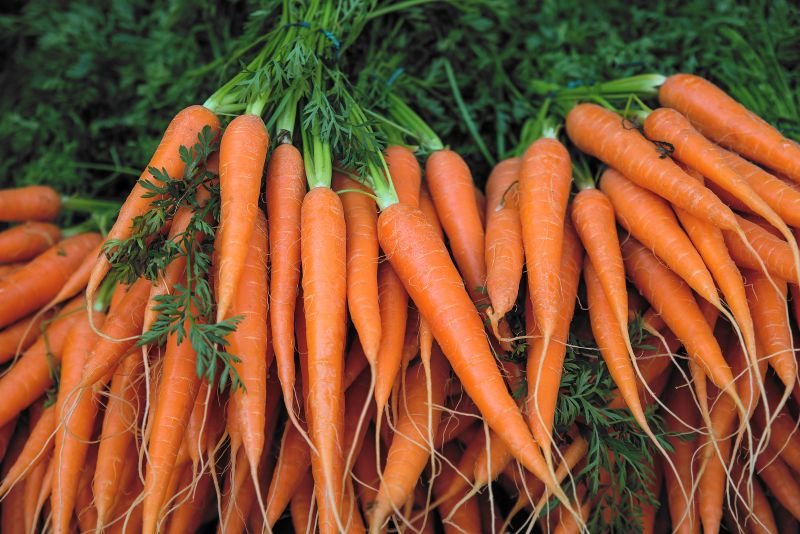
Root vegetables are some of the most satisfying vegetables to plant in cooler weather, making up some of our favorite flavors of the cool season. Carrots and radishes in particular are great vegetables for beginners to grow, and can be planted together in containers, in raised beds or directly in the garden. Read on to learn more about planting and caring for carrots and radishes.
While carrots and radishes can be planted from nursery-grown seedlings, our recommendation is to direct sow the seeds. Root crops do not transplant easily, as they do not like to be disturbed. Carrot and radish seeds can be planted in early spring, 2 to 3 weeks before the last frost, or in late summer/early fall after the heat of summer has passed, at least 4 to 6 weeks before the first fall frost.
If you are planning to grow your carrots and radishes in a container, make sure that the vessel is up to 12” deep. Select a container with drainage holes to allow excess water to drain from the bottom of the pot. Coast of Maine Raised bed mix is an excellent potting mix for raised beds and containers, but there are plenty of other choices.
If you are planting directly in the ground, you’ll need to dig deep and eliminate any rocks or clumps from the planting area. Rocks and compacted soil will cause carrot and radish roots to split and become deformed. Make sure your soil is loose and well-draining by mixing the existing soil with a compost such as Bumper Crop.
Carrot seeds will take up to three weeks to sprout. Radishes are quicker; they will germinate within a week of being planted. You can plant the tiny carrot seeds about 2-3” inches apart and ¼” deep, covering them lightly with your soil mixture. For radishes, their tiny seeds will need to be 1” apart, ½” deep. Carrots and radishes have similar growing requirements and will grow well together.
While you are waiting for your seeds to germinate, check on their moisture every day. The goal is to keep the seedbed evenly moist while the seeds are getting ready to sprout. The soil must be consistently moist to the touch, but not drenched. Once the green leaves of radishes and carrots start to grow, they will need at least one inch of rain or water per week. Overwatering radishes and carrots can cause root rot, but underwatering can lead both plants to become tough, woody and bitter.
Both carrots and radishes need at least 6 to 8 hours of sunlight per day. It is possible for radishes to grow in part shade as well, but this may affect the size of the roots if they receive too little sunlight. Carrots prefer soil temps of 55 to 75 degreens, but radishes can handle cooler weather and soil temperatures down to 40 degrees Fahrenheit. The heat of summer may be too much for radishes, so if you are wanting to plant them in summer, do so towards the end of the season.
Root vegetables require loose, fertile and well-draining soil. This is more easily attainable in raised beds or containers, but you can also work the soil in your garden beds to get this consistency. As long as you amend your soil before planting, both of these vegetables will not need to be fertilized. If you do want to fertilize, make sure you are using a low-nitrogen option. Too much nitrogen will go straight to the leafy greens instead of root development.
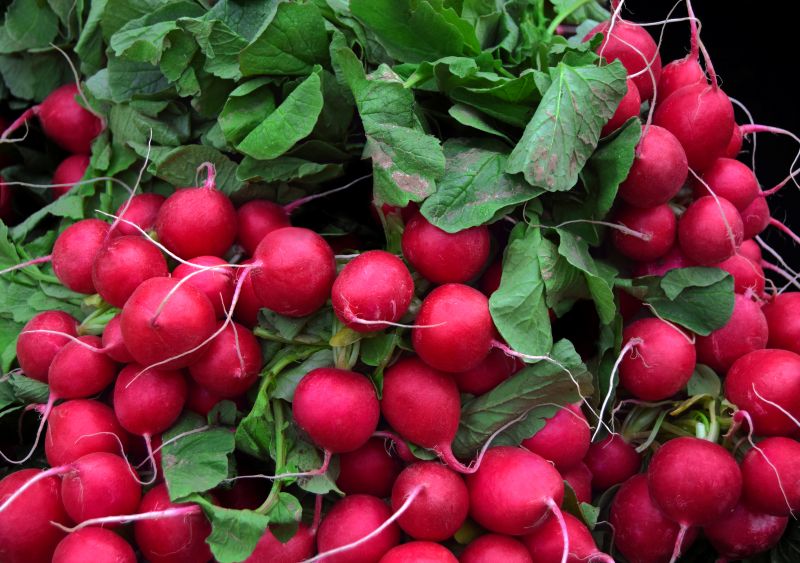
Cutworms and flea beetles are some of the common pests that we encounter with radish plants. Covering your radishes underneath floating row covers will help keep these pests at bay. Planting flowers such as calendula, alliums, chervil and marigolds can also help deter pests.
Diseases such as downy mildew, black root and scab can also affect radishes, but overall, radishes seem to evade these problems. As for carrots, whiteflies and carrot flies affect these plants the most. Companion planting with alliums, rosemary and marigolds can help deter these species. You can also use organic sprays to eradicate pests or netting.
Most carrot varieties are ready to be harvested around 60 to 80 days after planting. Radishes are one of the fastest growing vegetables and many varieties take just one month to be harvest ready. Check your seed packets to confirm the days to maturity for your particular variety of carrot or radish. When you see the tops of the raddish or carrot roots emerge from the soil and begin to push their way out of the soil, that’s when you’ll know they’re ready to pull. Gently pull the whole plant up by its leaves. For carrots, you may want to delicately loosen the soil around the root with a trowel or other gardening tool before pulling it out of the ground. Do not leave your radishes and carrots in the ground for too long. This will cause the vegetables to become woody and dry.