Looking to add a little home-grown flavor to your culinary dishes? Look no further than our vast pepper varieties that we carry here at Merrifield Garden Center. Peppers are some of the most rewarding vegetables to grow in the garden as they grow quickly and produce more than enough for you to get through the growing season. Here are some tips and suggestions for growing peppers in containers.
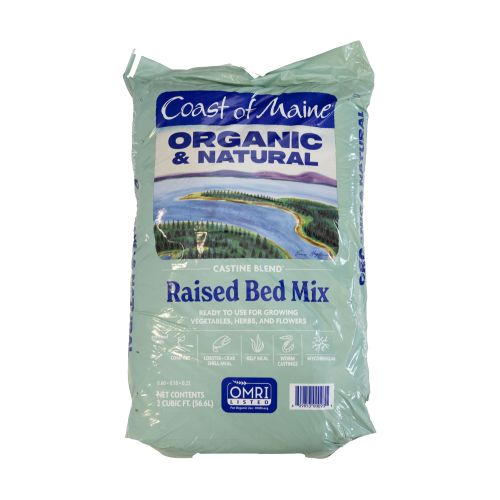
No matter what size your outdoor space is, growing your fruits and vegetables in containers gives you the most convenience when watering, tending and harvesting. When you grow in containers, you have total control over the growing environment. You can build a soil base that will provide the optimum nutrients for peppers.
We recommend planting in large containers for your pepper plants, about 21 to 24” in diameter. In this size container you can fit about four plants. Select a container with drainage holes so that water drains through the bottom of the pot. Choosing a lighter colored pot can also help to keep the soil cool during the summer months.
Your pepper plants will need full sun, 6 to 8 hours a day. Pepper plants are less sensitive to heat than tomatoes, and will develop flower longer into the summer season.
When you are watering, use a watering wand to direct the water over the soil rather than onto the plant’s foliage. Wet leaves can lead to problems like mildew, wilting or rotting, so it’s best to avoid getting them wet. You will want to check your pepper plants daily to see if they need water, especially during the extreme heat in summertime. Poke your finger into the soil about 1 to 2” deep and if the soil feels like it’s beginning to dry out, give it a good soak. In general, we recommend watering in the morning before the heat of the day. This provides time for any water that splashes onto the plant’s leaves to evaporate before the sun is at its highest point.
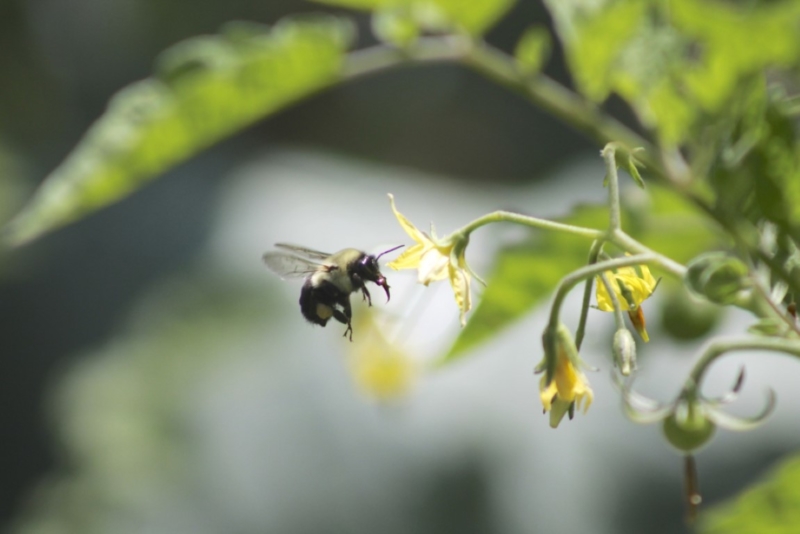
Your pepper plants will require pollination to produce fruits. Bumble bees are some of the best pollinators for pepper plants and other fruits and vegetables. If you are not seeing bees or other pollinators around your plant, you can use a q-tip or paint brush and carry the pollen from flower to flower manually. This is especially important if you’re growing in a greenhouse or other indoor conditions. Check with our plant specialists on the requirements for your specific varieties based on your growing environment.
If you fertilized your pepper plants when planting, you can wait 2 to 3 weeks before fertilizing again. After this time, begin fertilizing with a vegetable fertilizer such as Jack’s Classic Veggie Feed once weekly. This is a water soluble plant food that, when diluted, adds helpful nutrients back into the soil. Water your pepper plant first, then apply the diluted fertilizer. Always follow the application instructions on the package to determine the amount of plant food to use. We suggest fertilizing when the temperatures are below 85°F, in the morning.
As your pepper plant grows, suckers will emerge on the lower stems of your plant. You can remove these suckers as you see them to ensure that the energy of the plant is geared toward flower and fruit production. The same goes for the bottom branches. Pruning off the bottom foliage will push the plant to expend energy into fruit production.
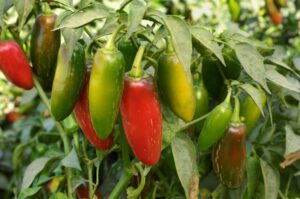
Jalapeños are known to have a bright, slightly grassy flavor when they are green, turning sweeter when they ripen to red. They tend to have a medium spice level. At 2 to 4” long, these peppers are small but mighty. The plant will grow to be 3’ tall at maturity after 70 to 85 days. Jalapeños are wonderful for salsas, pickling and grilling.
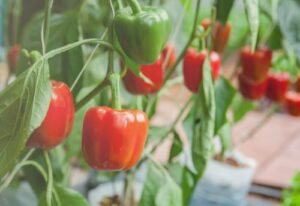
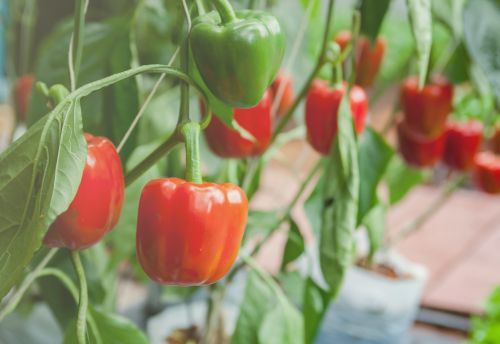
Bell peppers are larger and sweeter than jalapeños. The plant will reach up to 3’ tall at maturity, 70 to 90 days post seed germination in the garden. All bell peppers will begin green and turn to yellow, orange and red over time. If you harvest when they’re green, you’ll have a more crisp pepper flavor that will sweeten as the fruit ripens to orange and red. Bell peppers are delicious in salads and other dishes.
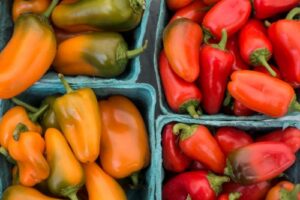
These miniature bell peppers are small, sweet and great as a healthy snack. The plant is compact, only growing to be 2’ tall at maturity after 60 to 75 days post seed germination. These are a great choice for anyone looking for a compact pepper variety.