Fall is the ideal time for planting shrubs, and for those who love birds, there are plenty to choose from that provide berries edible for birds (and some for both birds and people!). Berries are an important source of food for many of our native birds, and we can also use those edible to us to make jams, jellies, syrups and other desserts. Here are some of our favorite berrying shrubs for fall.
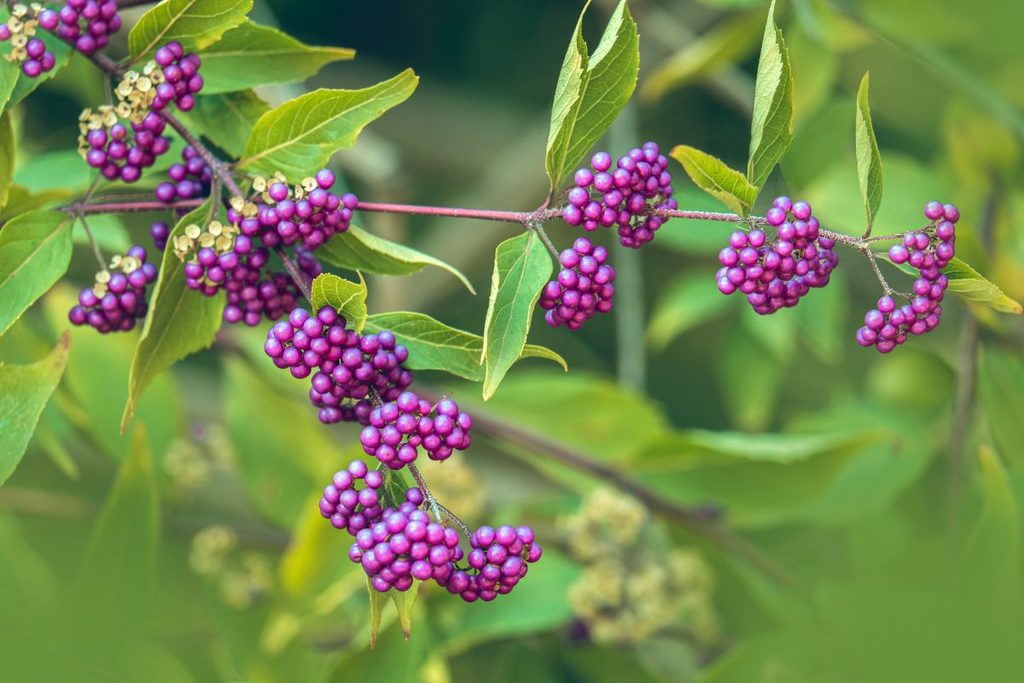
Beautyberry (Callicarpa americana)
This native shrub produces clusters of vibrant purple or white fruits on long stems. Birds adore these berries, which ripen in late summer and continue through fall. These berries are edible to humans, but are not known for their flavor. Some people do make them into jelly. Tiny flowers precede the berries in spring and early summer in in shades of purple, pink and white.
Beautyberry grows well in moist, well-drained soil in full sun to part sun conditions. Sunnier locations will result in higher berry yield. This shrub is fast growing, gaining 1 to 2 feet per year, and can reach up to 9 feet.
Blueberry
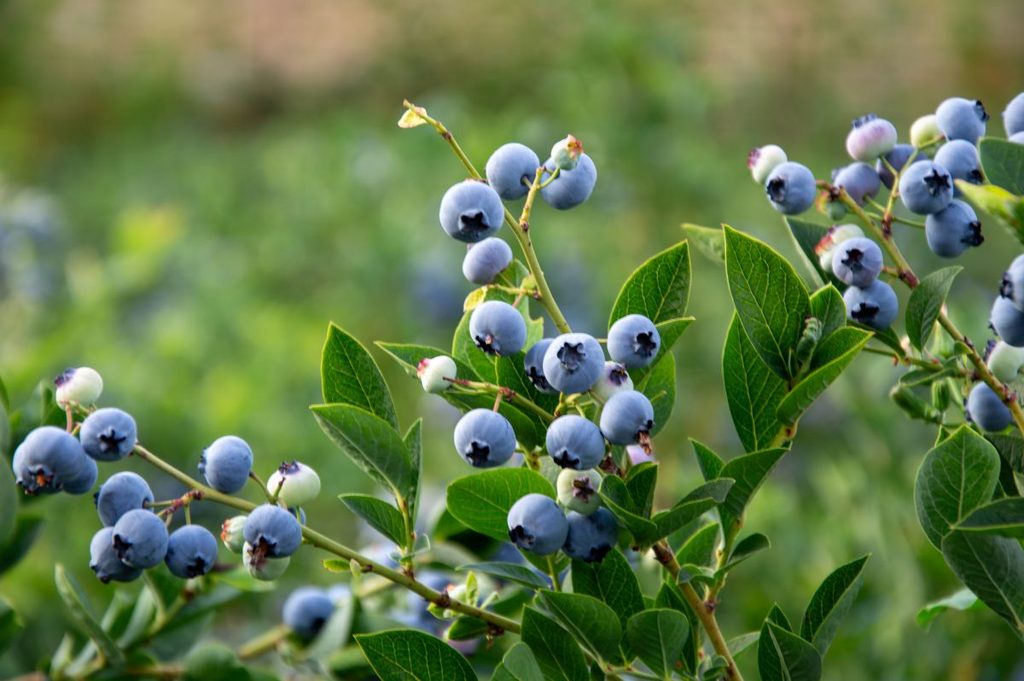
These popular fruits can be easily grown in Virginia, but you will need to take steps to protect the fruit if you want it yourself! Birds love to snack on blueberries. There are a wide variety of blueberry cultivars to choose from, so select those with a flavor and color you like best. They typically start fruiting in June. You can use blueberry bushes in your landscape as hedges or borders. They are self-pollinating, but cross pollination of different varieties will help to produce even more berries. We recommend planting blueberries of different varieties throughout your yard to increase their yields. Blueberries grow up to 3’ tall with some varieties reaching 8’ tall at maturity. They require well-drained soil and at least six hours of direct sunlight per day.
Chokeberry
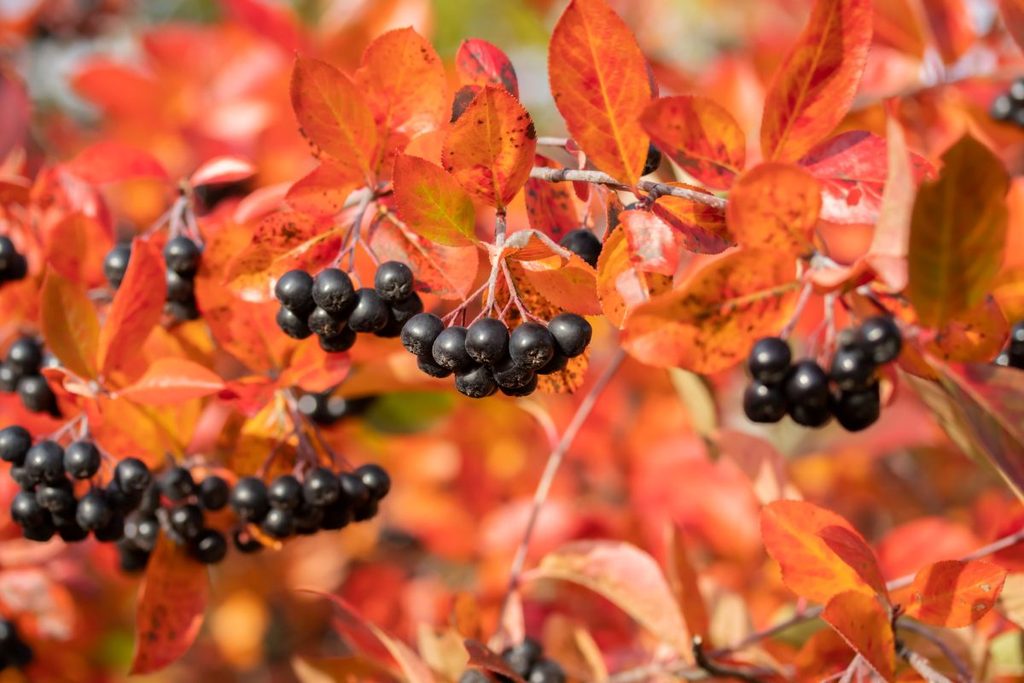
Chokeberry shrubs offer multiple benefits in the garden. In spring they produce white flowers that attract pollinators. In summer, the flowers are replaced by clusters of dark bluish black or red berries, and in fall, the foliage color changes to bright red and orange. While birds love the berries, we can use them to make jelly and jam.
Chokeberry prefers full sun to partial shade and well-drained soil. They can tolerate boggy soil and hot weather. They will grow up to 8’ tall at maturity and should be planted 6’ apart from other shrubs.
Elderberry
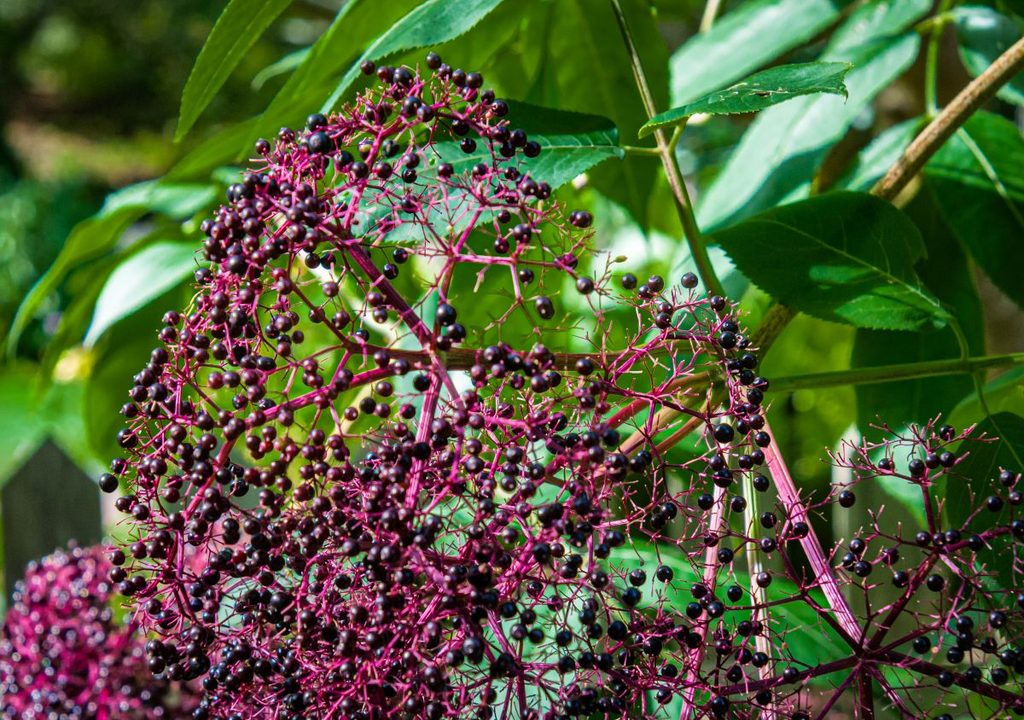
In addition to serving as a food source for birds, elderberries are often used in jams, pies, syrups and wines. You can harvest these berries in late summer into early fall when they are dark black and softly textured. Flowers precede the berries, which are popular with pollinators.
Elderberries will grow in full sun to part shade and prefer moist, well-drained soil. They can grow very large, up to 30 feet. Although elderberries are typically wind-pollinated, you can cross pollinate in your yard by planting at least two different varieties around 20’ away from each other in the landscape.
Viburnum
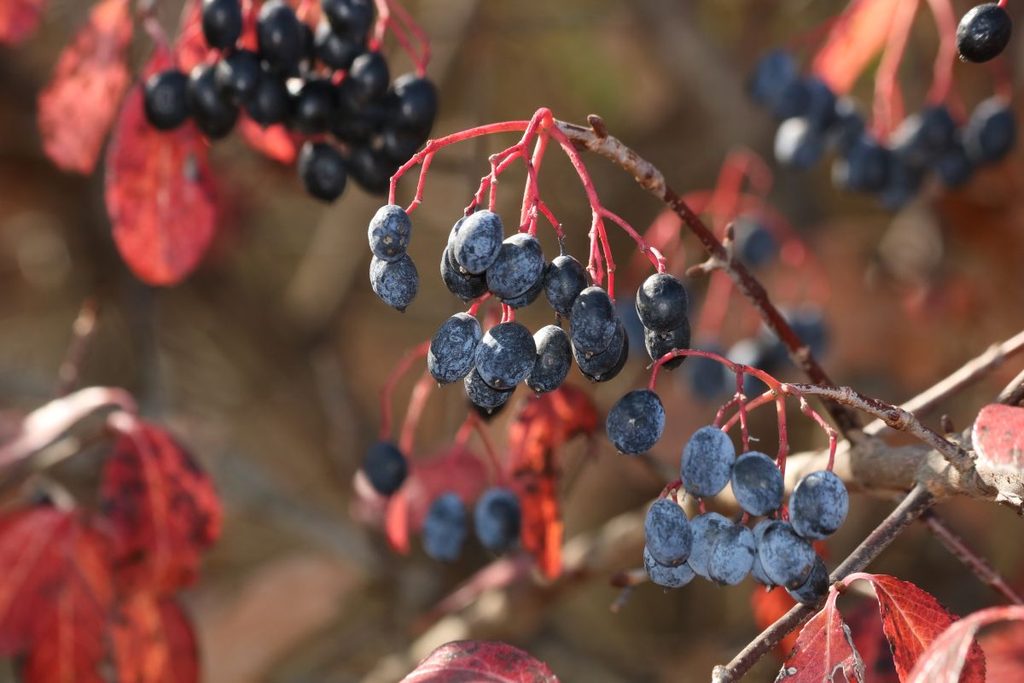
Viburnum shrubs produce white or pink fragrant flowers in spring, followed by berries in the fall. The protein-rich berries are red, blue, black or yellow depending on the variety and are nutritious for wildlife. Viburnum berries can be made into jelly, jam or wine. The shrubs can be used as hedges, in screening, or as specimens in the garden. There are a number of native options to choose from.
Depending on the variety, viburnums can reach anywhere from 3 feet to 20 feet. These shrubs require full to part sun and moist, well-drained soil. Viburnums are fast growing, gaining a foot or two in height per year. Although viburnums are typically monoecious (having both female and male flowers on the same plant) two genetically different species must be planted close together to cross pollinate.
Winterberry
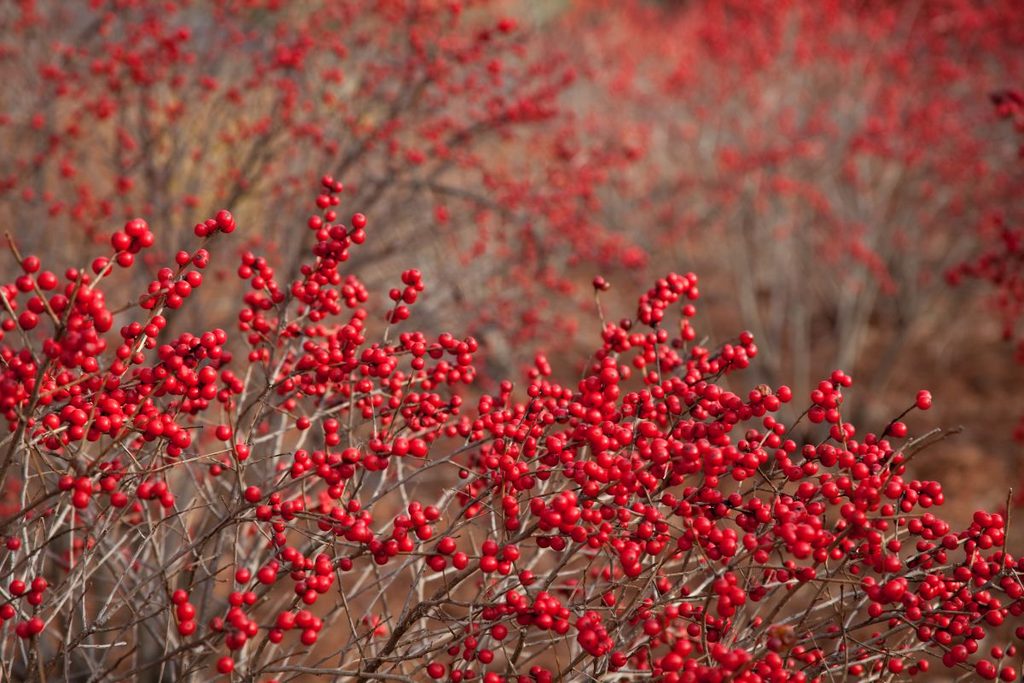
These winter-hardy shrubs offer fragrant green and white flowers that bloom in summertime as well as red berries that are delicious and protein-rich to wildlife throughout the winter and into spring.
Winterberry shrubs thrive in full to partial sun and moist, well-drained soil with an acidic pH level. We suggest that you purchase both a male and female winterberry in order for the shrubs to produce fruit. Male varieties bear pollen while the female produces the berries. Male and female winterberry shrubs should be planted within 40 to 50’ of each other in order to ensure fruit production.
If you want to learn about what else we carry for bird supplies at either of our locations, visit our bird supplies webpage.