Everyone loves to see beautiful hummingbirds in their gardens, flitting from flower to flower as they search for nectar. Here in Virginia, the Ruby-Throated hummingbird is our primary hummingbird species. These tiny birds weigh as little as a single penny, with hearts that beat over 1,200 times per minute in flight. Hummingbirds seem to defy gravity, flying forward, backward, sideways and even upside down, flapping their wings up to 80 times per second. Each day they visit up to 2,000 flowers, drinking nectar and transferring pollen as they search for food.
Ruby throated hummingbirds arrive in Northern Virginia in mid-April, and generally stay until late September or early October, when they depart for Central America. They need lots of nutrients, so anyone wanting to attract them to their garden can do so by creating a buffet of their favorite flowers. We will cover some tips for attracting hummingbirds in this guide, not only their preferred flowers but also ways to provide shelter and water accessible to these acrobatic birds.
Flowers for Hummingbirds
Hummingbirds are drawn to bright colors and long, tubular flowers which they can easily access with their bills. Climbing vines, taller perennials and hanging baskets provide plenty of options for these tiny birds to choose from. Here are some specific plants to consider:
Bee Balm
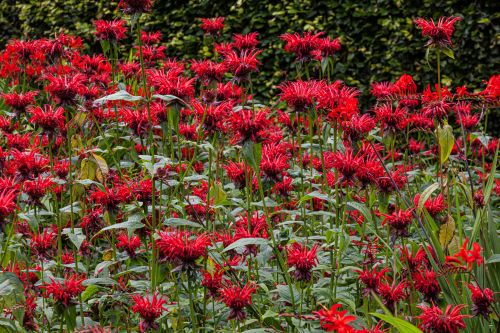
Bee balm’s tubular petals are ideal for hummingbirds’ long beaks. This plant comes in shades of purple, pink and red, but you may find Hummingbirds are especially drawn to the red blooms. Scarlet Bee Balm, Monarda didyma, is our favorite species of bee balm to plant for Ruby Throated Hummingbirds.
Cardinal Flower
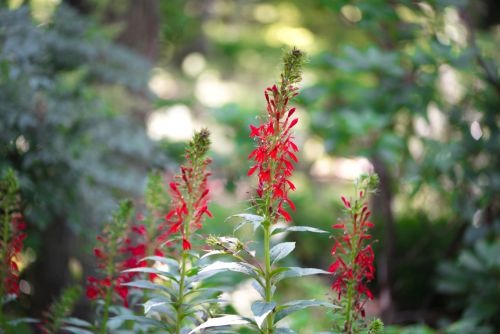
With blooms peaking between late July and September, cardinal flower provides plenty of late season fuel for hummingbirds before they begin their migration to the Gulf of Mexico. The flowers of this plant are deep and narrow, making them too constrictive for bumblebees, but perfect for hummingbirds. There are two species of cardinal flower, with one blooming in red (Lobelia cardinalis) and the other in blue (Lobelia siphilitica).
Salvia
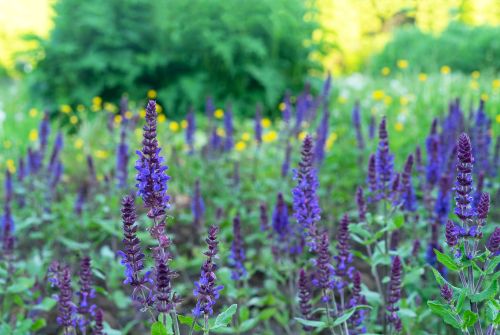
This deer-resistant option is perfect for gardeners who want to attract hummingbirds but struggle with deer eating their gardens. Native species like Salvia lyrata will bloom continuously for months with tubular blooms that are perfect for hummingbirds. There are also a wide variety of other salvias available in many colors and sizes.
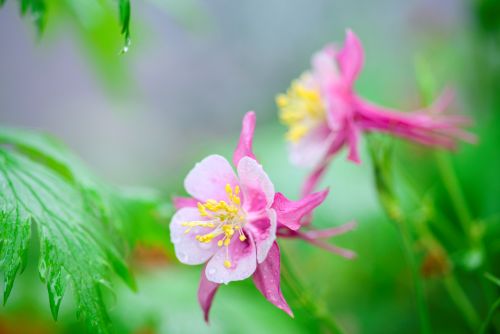
Columbine
Blooming right as the hummingbirds arrive in Virginia, Eastern Red Columbine in particular is the perfect early season plant for welcoming Ruby Throated Hummingbirds to our gardens. This native has bright red and yellow blooms with nectar easily accessible to hummingbirds but difficult for bees to reach.
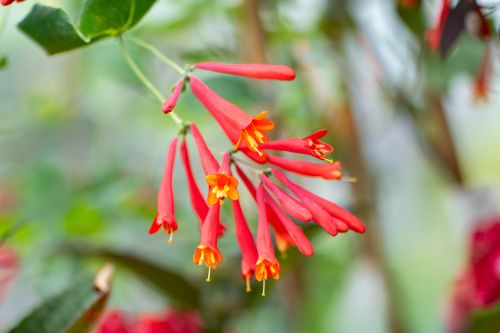
Trumpet Honeysuckle
A wonderful native honeysuckle, this variety provides an excellent amount of nectar without taking over the garden. It features clusters of trumpet-shaped flowers, perfect for a hummingbird’s narrow bill.
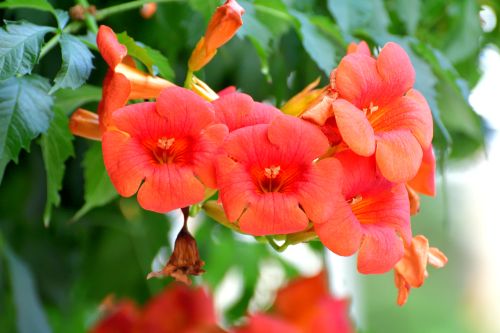
Trumpet Vine
Not to be mistaken with the Trumpet Honeysuckle, Trumpet vine is also a native climber, but features larger, vivid orange blooms. It produces enough nectar to support multiple birds. Please note that it will grow aggressively, and should be planted on a fence or arbor to allow it to climb. You may want to select a different plant if you want to keep your plant tidy and contained.
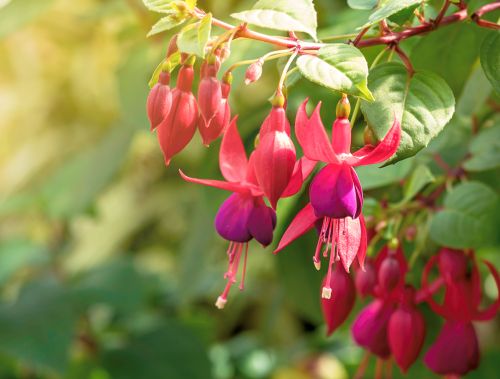
Fuchsia
Fuchsia often comes in hanging baskets in the early spring. These dramatic, colorful blooms are highly appealing to hummingbirds. Nodding flowers are generally pink and purple in color but may come in other shades and combinations. Gartenmeister Fuchia is an alternative type that features tubular, coral shaded flowers.
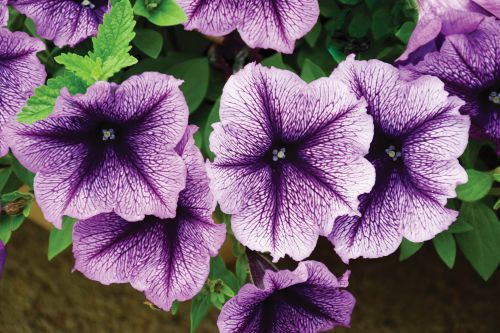
Petunia
Petunias are a common annual staple of the garden, easy to grow, cheerful and available in virtually any color you could imagine. Planting them in containers or at ground level in the garden will attract hummingbirds as they spot the vibrant colors from high above.
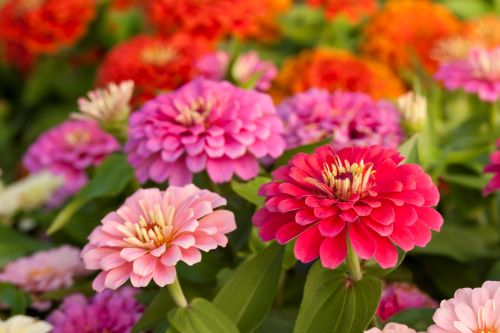
Zinnia
These colorful plants are wonderful nectar sources for hummingbirds and smaller flying insects. These annual flowers are easy to grow in full sun and also make excellent cut flowers.
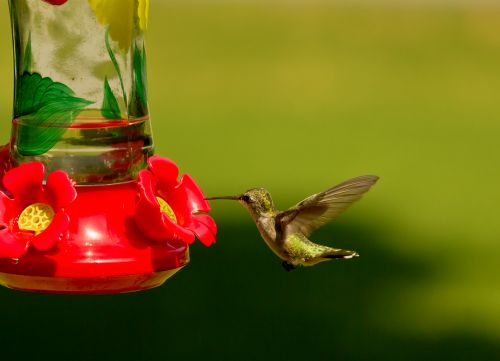
Hummingbird Feeders
Feeders can be a wonderful and decorative addition to hummingbird friendly gardens. If you choose to use a hummingbird feeder, you will need to change the nectar and clean it every few days. We carry hummingbird nectar in concentrate, powder and ready-to-use liquid form. The concentrate and powder forms must be diluted with water.
Make sure you are cleaning your feeders every 3 to 5 days. When left sitting for too long, the nectar in your feeder may develop bacteria dangerous to hummingbirds. If you have multiple feeders, spread them out at least 10 to 20’ apart, as male hummingbirds are known to fight over nectar.
If you wish to make your own nectar, simply mix four parts water with one part granulated sugar. We do not recommend using food coloring or alternative sweeteners like honey.
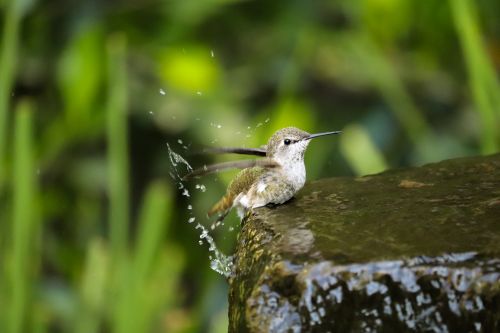
Add a Water Source
Hummingbirds cannot use deep birdbaths, so we suggest installing a mister or a shallow fountain with flat, rough stones in the water so the birds can safely sit.
Create a Space to Rest
It may be hard to believe that these high-energy birds spend much of their time resting, but it’s true! We suggest leaving exposed dead branches to serve as vantage points where hummingbirds can create a little nest to sleep in. Dense shrubs are also perfect for female hummingbirds to camouflage their nests. If you can, keep spiderwebs on your plants when spiders build them, as hummingbirds use webs to build their nests.
Stay Away from Pesticides
We recommend not using pesticides in the garden if you are trying to attract hummingbirds. Bugs like gnats, aphids and mosquitoes are critical protein sources for these birds and using pesticides will kill their major food source.