If you are looking for something to brighten up your summer landscape, hydrangeas are the perfect plant! These beautiful plants bloom in bouquets of large white, pink and blue blossoms. In any garden, hydrangeas can turn a green summer landscape into a show of vibrant flowers. Here are our hydrangea picks:
Smooth Hydrangea (H. arborescens)
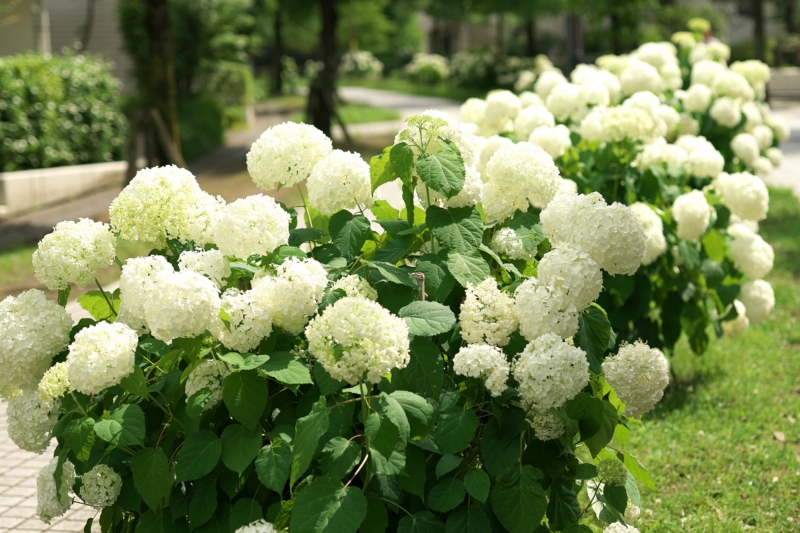
Smooth hydrangea is our native hydrangea, local to the eastern United States. Some top cultivars include:
- ‘Annabelle’ features stunning white flower clusters up to 12 inches wide. The flowers appear in late spring to summer, often continuing into fall. Strong, straight stems hold up the huge flower heads.
- ‘Incrediball’ also produces large flower heads up to 12 inches and features ultra-sturdy stems.
- ‘Invincibelle Spirit II’ is a very strong rebloomer with deep pink, mophead blooms.
- ‘FlowerFull’ is an innovative variety that blooms two to three times more than other smooth hydrangea cultivars.
Bigleaf Hydrangea (H. macrophylla)
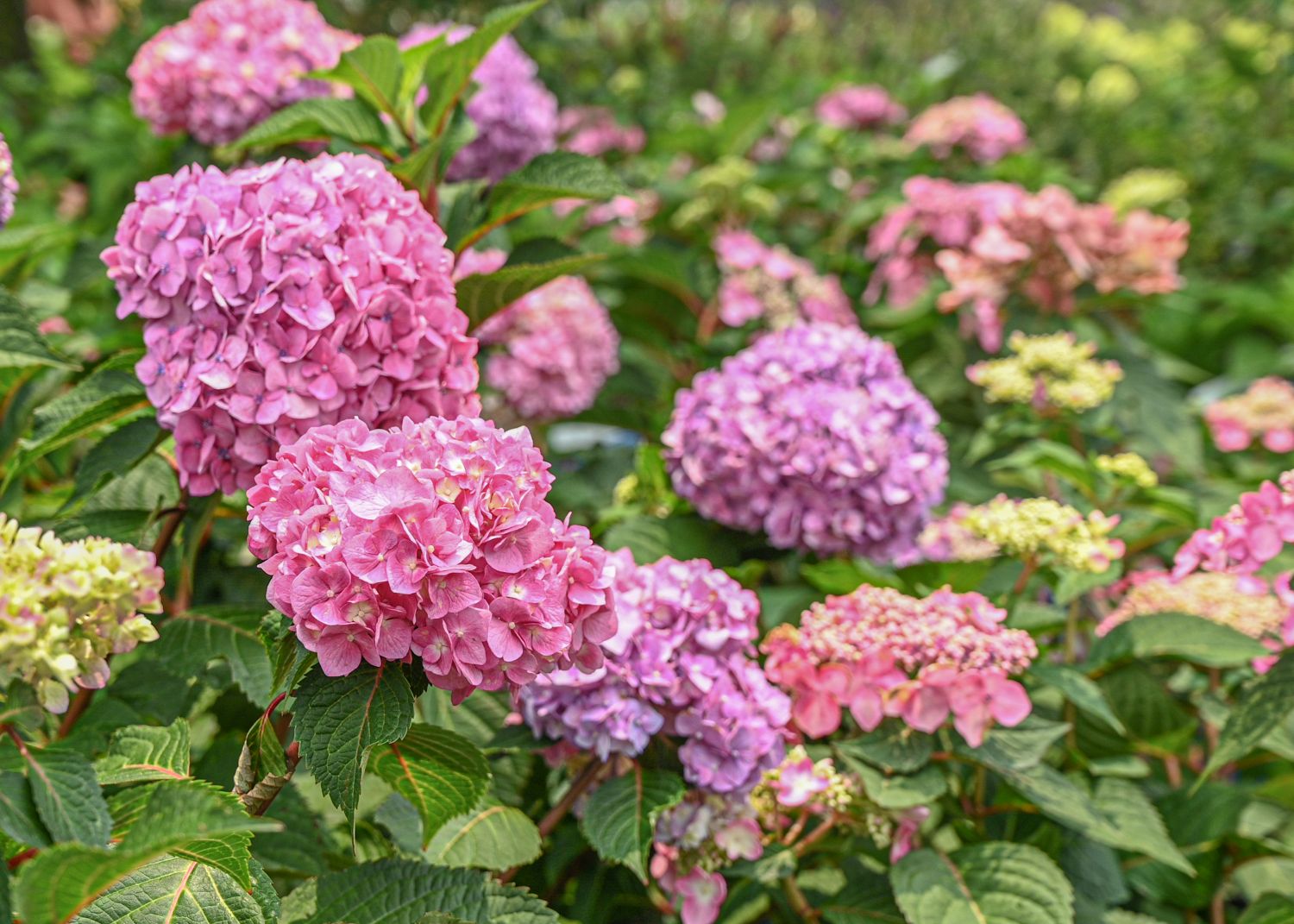
Arguably the most recognizable of all hydrangeas, bigleaf hydrangeas are in full bloom from June through July. The flowers come in two shapes – round and softball sized (mophead), or flat topped and delicate (lace-capped).
With many of these varieties, the blooms tend to be blue in acidic soils and pink in more alkaline soil. The colors of pink and blue flowers can be changed by altering the pH of the soil, but white flowers cannot be changed by altering the soil.
Our bigleaf hydrangea picks:
- ‘Bloomstruck’ features exceptional cold hardiness and has ruby-red to purple stems.
- ‘Cherry Explosion’ is a gorgeous lace-capped hydrangea that blooms on both old and new wood, giving you flowers starting early and continuing well into autumn.
- Repeat bloomers will continue blooming throughout the summer. Our favorites are ‘Endless Summer’, ‘Blushing Bride’, ‘Twist-n-Shout’ and the ‘Let’s Dance’ series.
Oakleaf Hydrangea (H. quercifolia)
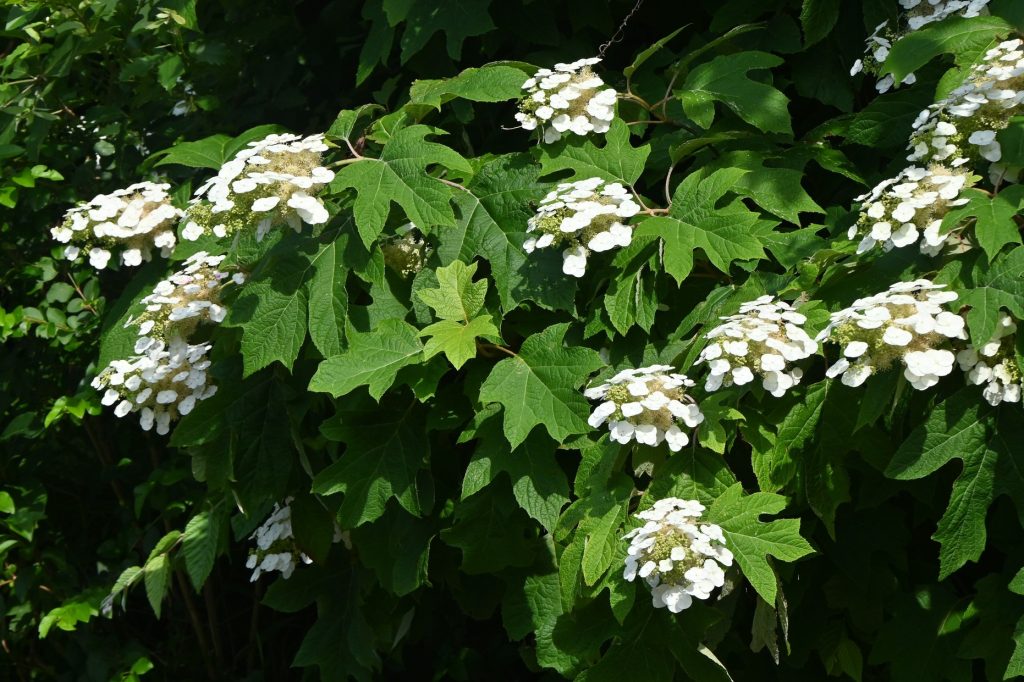
Native to the southeastern United States, Oakleaf is named for its dark green, oak-like leaves. It produces large creamy white or pink blossoms. This hydrangea provides four season interest with deep mahogany-red leaves in the fall and exfoliating bark in winter.
Our Picks:
- ‘Ruby Slipper’ is a dwarf cultivar that blooms snowy white initially then changes color to a deep ruby-red that holds well in autumn.
- ‘Snow Queen’ is known for its strong, sturdy stems. It can reach up to 6’ tall and 8’ wide.
- ‘Alice’ is largest and most dramatic Oakleaf on the market, with blooms reaching up to 14” in length.
Panicle Hydrangea
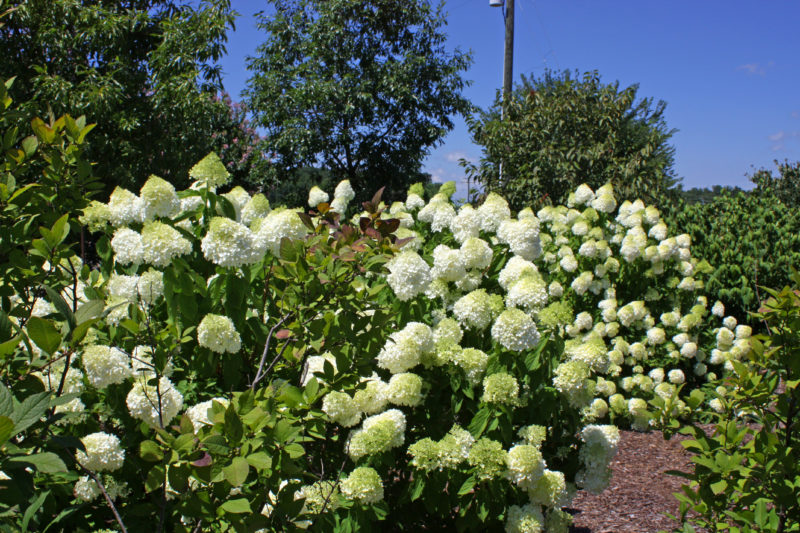
One of the last hydrangeas to bloom each summer, panicle hydrangeas are prized for their gracefully arching branches and clusters of white flowers.
- ‘Limelight’ and ‘Little Lime’ are compact cultivars featuring unique, light green blooms.
- ‘Bobo’ is an award-winning dwarf shrub known to be uniquely dense.
- ‘Little Lime Punch’ was named the 2025 Hydrangea of the Year and delivers beautiful color with a compact growth habit.
- ‘Pinky Winky’ features a two-tone flower display, emerging white in mid-summer and transitioning to a raspberry-pink over time.
- ‘Pufferfish’ blooms with colossal flower heads that engulf the rest of the plant in beautiful, fluffy white blooms.
Climbing Hydrangea
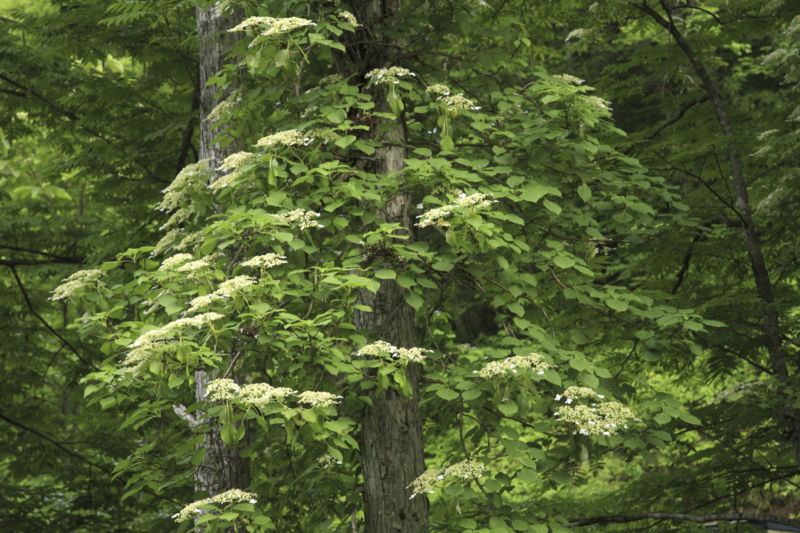
This sprawling, woody vine can reach 30-40 ft. and becomes covered in white, lace-cap flowers up to 10 inches in diameter in the late spring and early summer. It can tolerate part to full shade and climbs up any structures it is places against, or when unsupported, as a mounding, sprawling shrub.
Japanese Hydrangea Vine
Similar to the climbing hydrangea, the Japanese hydrangea vine blooms a little later in the season and has heart-shaped flowers One of our favorites is ‘Moonlight’, with silver, blue-green leaves and fragrant, white, lace-cap flowers.
Caring for your hydrangea
Selecting the right location will make growing beautiful hydrangeas that much easier. They thrive in partial sun and moist, well-drained soil. Morning sun and afternoon shade with good air circulation is idea. Allow enough room for your hydrangeas to grow – 4 ft. by 4 ft. for compact varieties and 6 ft. by 6 ft. for larger varieties.