While pollinator gardens are a major focus in the summer, it is also important to provide food for them through the fall season, even into October. There are plenty of late season blooming plants that provide a food source for these vital critters. Consider adding a few of the plants below to your garden to offer a food source for our butterflies, bees and other pollinating insects through the end of our growing season.
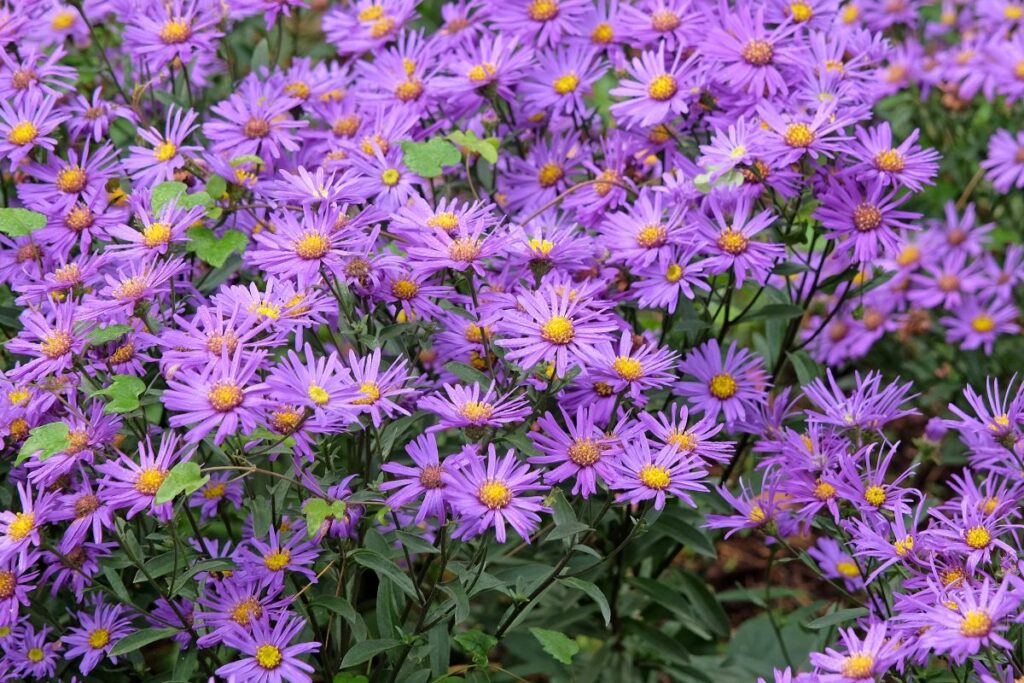
Aster
Around 112 different insect species rely on Asters for nutrients, including bees, butterflies and flies. Asters bloom from summer through fall, with several native to Virginia. New York Aster, for example, is compact native that is ideal for containers. New England Aster is a native variety you may encounter these while hiking in Great Falls, or through other wooded areas. Asters grow 3 to 6 feet tall at maturity, depending on the type, and come in purple, pink, blue and white.
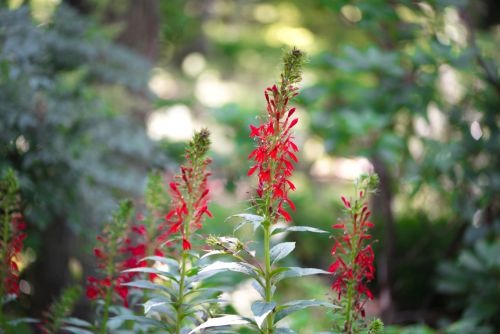
Lobelia
Both our red and blue lobelias: Lobelia cardinalis and Lobelia siphilitica, bloom from late summer into the fall season. With tall spikes of tubular blooms, these plants are particularly popular with hummingbirds, and are notable for growing well in part shade conditions. They are an excellent late season bloom to add to woodland gardens.
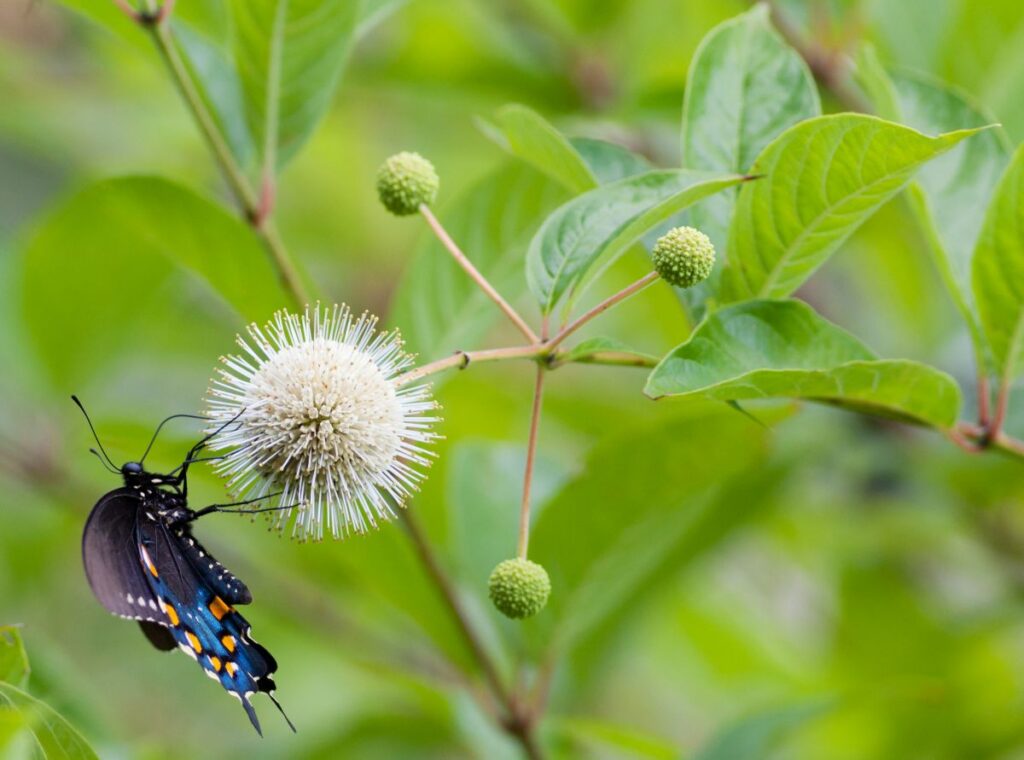
Buttonbush
Buttonbush is a deciduous shrub which blooms in tiny, spiky white balls throughout the summer. Its nectar source is popular with a variety of native butterflies and bees, as well as hummingbirds.
If you are dealing with wet areas in your garden, buttonbush is an excellent choice as it is adaptable to a variety of soil conditions. This shrub is fast growing and can tolerate full to partial sun.
Black-Eyed Susan
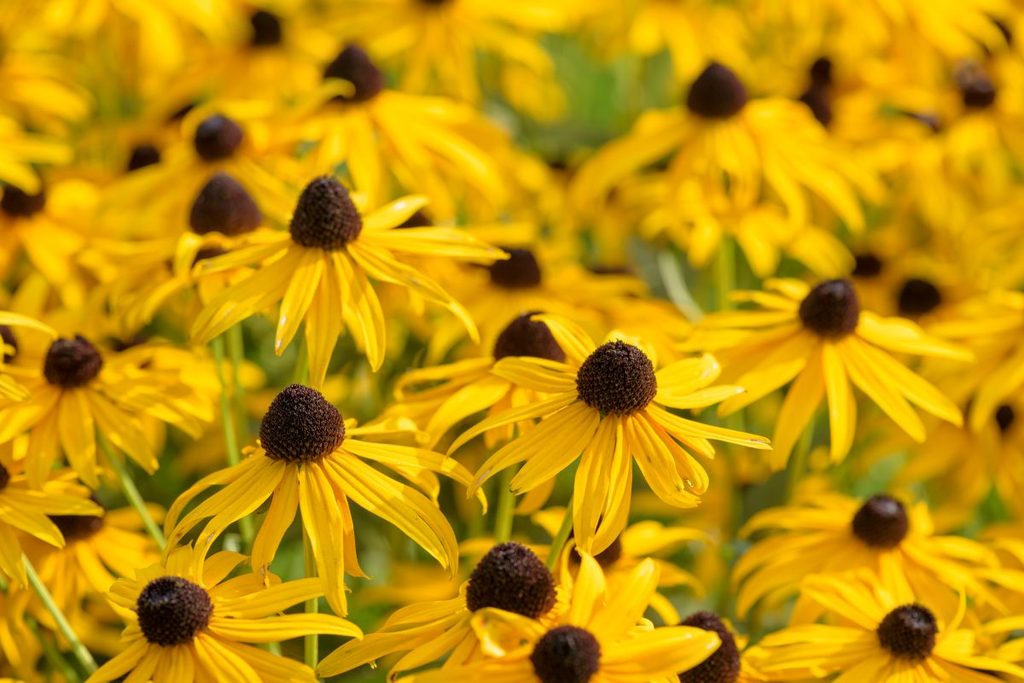
Black Eyed Susan is a popular native that typically blooms in late summer, and performs best in areas with light shade. If you keep the spent blooms on the plant, birds will eat the seeds in the fall. Rudbeckia fulgida, Rudbeckia hirta, Rudbeckia lacinata and Rudbeckia triloba are all very popular species in the garden. Rudbeckia fulgida ‘Little Goldstar’, will bloom into late August and is more compact than other Rudbeckias. Rudbeckia hirta is more drought tolerant than Rudbeckia fulgida, and a good choice for anyone dealing with drier areas in their garden.
Goldrenrod
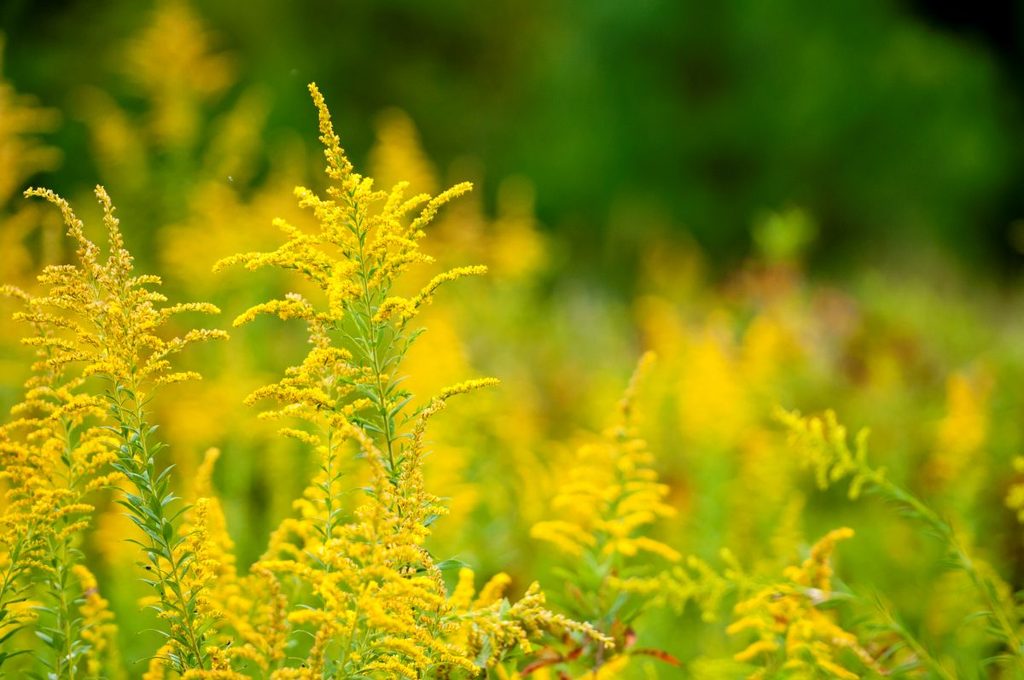
Goldenrod (Solidago) supports over 100 different species of insects and other pollinators. ‘Fireworks’ is a good choice for a late blooming, taller goldenrod and ‘Little Lemon’ starts blooming a bit earlier, in mid-July. Goldrenrod performs well in a perennial border or naturalized area for late blooming attraction. You can also use them as cut flowers.
Goldenrods are generally deer and drought resistant, but need full sun. These plants typically occur in dry, rocky soils such as by roadsides, in open woods settings, on slopes and in prairies.
Joe Pye Weed
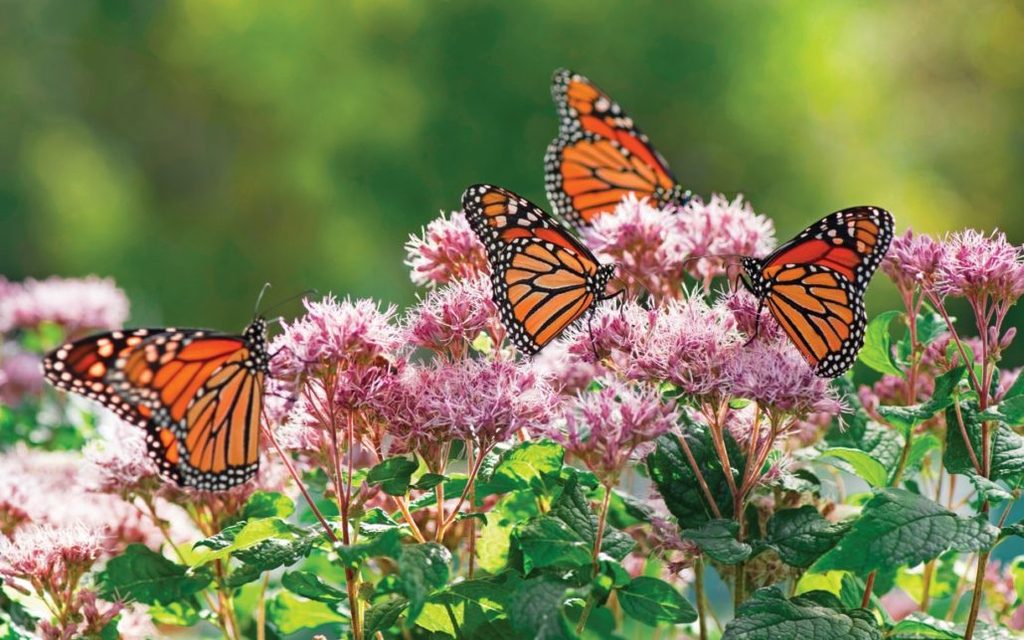
Joe Pye Weed is a native that can be found in floodplains and woodland borders. It is a huge pollinator favorite, attracting monarch butterflies, skippers and many types of bees. It will typically begin blooming in late summer and throughout the fall. Its flowers grow in pink clusters on top of sturdy, purple stems. Birds will feed on the seed heads if you leave them on during the cooler months.
Joe Pye Weed performs best in full sun to part shade conditions, tolerates wet soil, and is generally deer resistant.
New York Ironweed
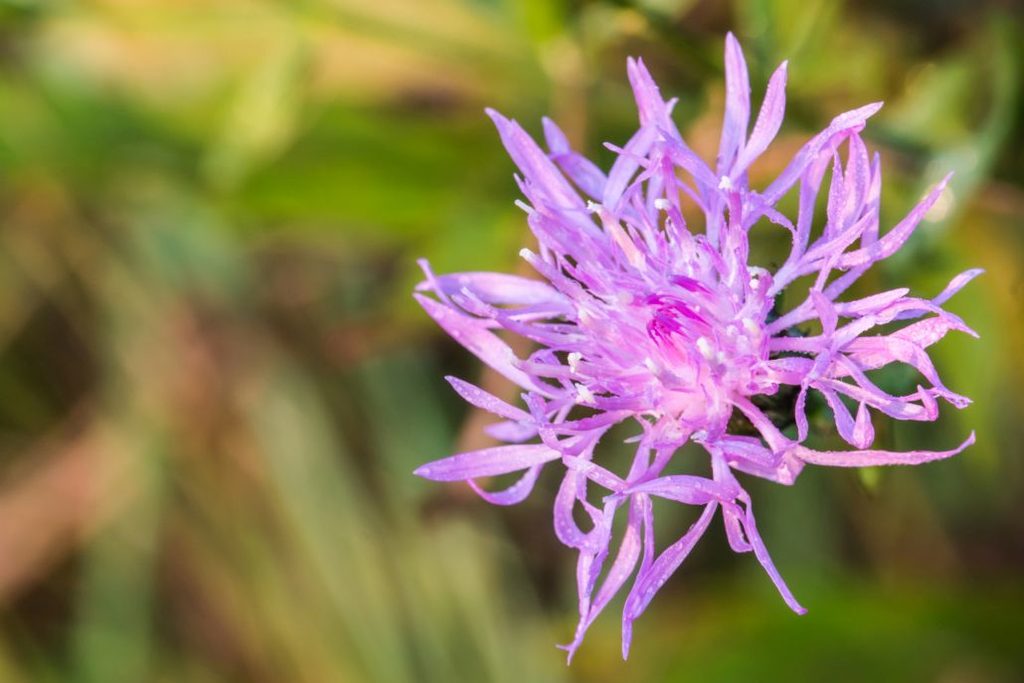
These upright, perennial wildflowers tower in the landscape, growing to be 7’ tall at maturity. Both New York Ironweed and Threadleaf Ironweed are native to our area and are often found in wet areas, including marshes and by streams. They require at least 4 hours of full sunlight. They produce tiny purple flowers that are particularly enticing to American Painted Lady butterflies. Along with butterflies, New York and Threadleaf Ironweed draw bees, moths, hummingbirds, beetles, flies and skippers.
Obedient Plant
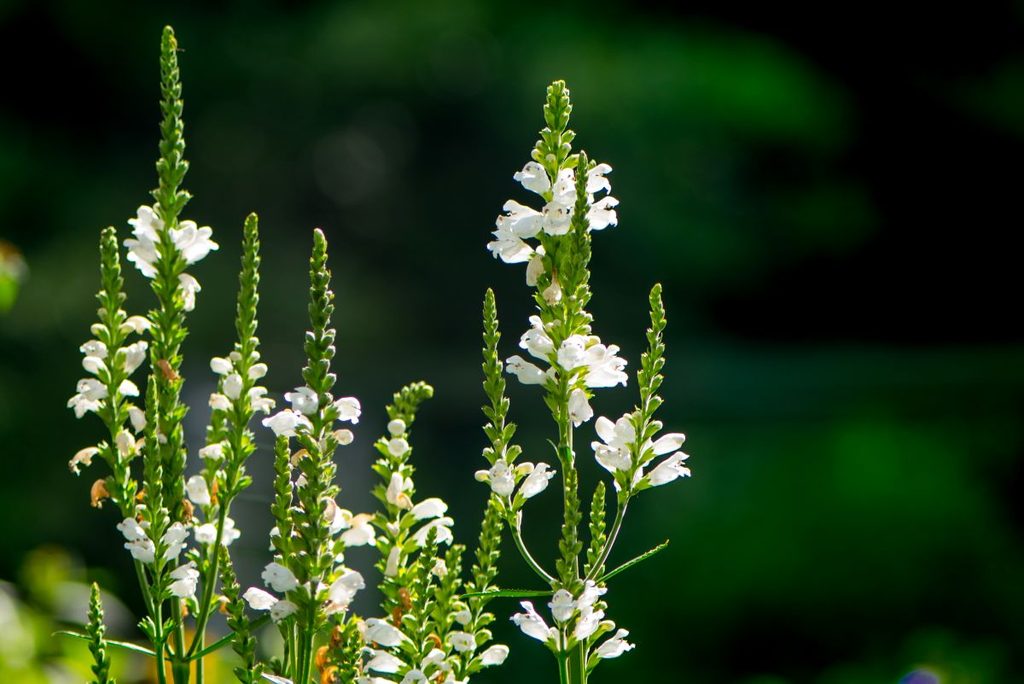
Obedient Plants boast pink or white blooms that resemble snapdragons. These herbaceous perennials are attractive to hummingbirds, bumblebees, long-tongued bees and butterflies, specifically the Henry’s Elfin Butterfly. They will grow to be 3 to 4’ tall at maturity and are commonly found natively along stream banks and in open meadows.
They will tolerate deer and clay soil and can be easily grown in well-drained, moist soil. They enjoy full sun to part sun and will bloom from June to September.
Sunflowers
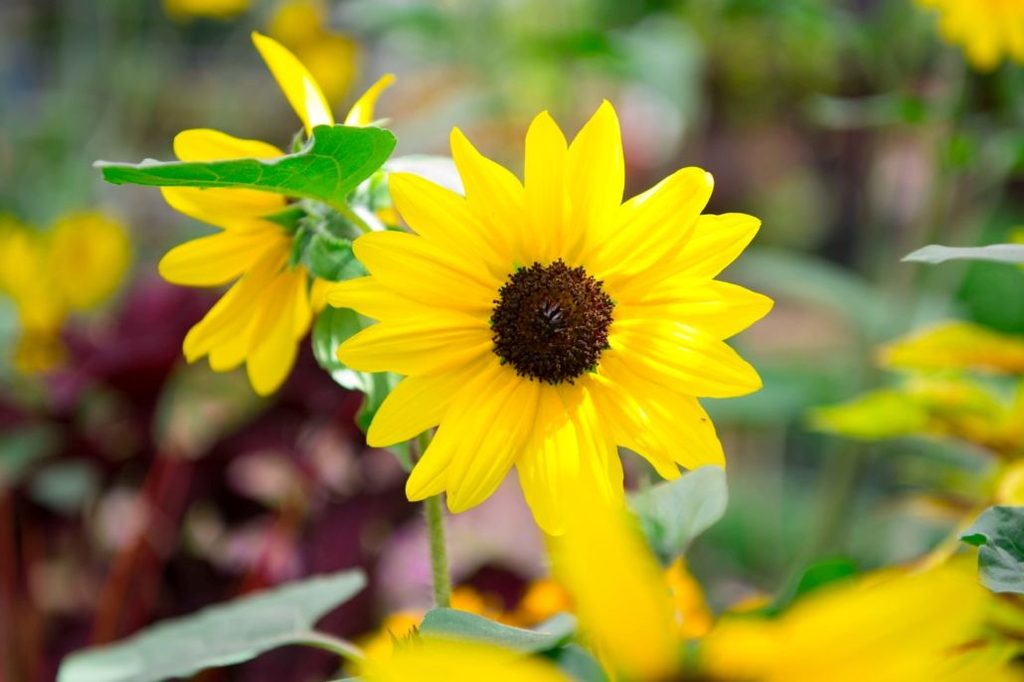
Heliopsis helianthoides, Helianthus salictifolius, Helianthus angustifolius and Helianthus annus are all sunflower varieties that bloom from late summer into fall, each with their own use in the garden. Heliopsis helianthoides in particular is native throughout most of Virginia. Helianthus salictifolius is often called willow-leaved sunflower. Popular smaller varieties are ‘First Light’, which grows to be 3 to 4’ tall, and ‘Autumn Gold’, which reaches only 2 feet. Helianthus angustifolius, also known as swamp sunflower, grows naturally in moist, sunny areas. Helianthus annus is an annual traditional sunflower that grows very tall and boasts grandiose blossoms late into fall.